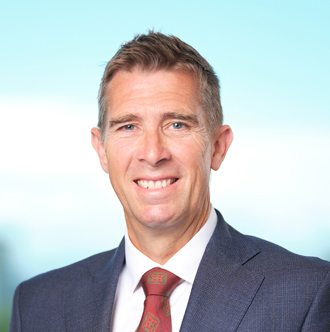
There’s been a lot of discussion lately about the looming “Silver Tsunami” and New Zealand’s preparedness for an ageing population. Milford CEO Blair Turnbull talks to Ryan Bridge about the changes that could help us become a nation of savers who aren’t just relying on a Super system that may not be able to support us in retirement.
Click here to download the MP3 file or listen to the podcast on your favourite platform:
Bridge talks Business: 24 February 2026
Episode Transcript
Ryan Bridge
Kia ora and welcome to episode 64 of Bridge talks Business with Milford. This week, how can New Zealand become a nation of savers?
There’s been a lot of talk in the media about this over the past few weeks – the looming “Silver Tsunami,” basically an ageing population. Like actual tsunamis, there are things that we can do to prepare to make sure we’re not wiped out financially when they hit.
This week, we’ve got Blair Turnbull on to help us do that, Chief Executive at Milford. But first, here’s your top five business bits from the last seven days.
- The US Supreme Court has ruled most of Trump’s tariffs illegal, so he’s gone and created new ones. First at 10%, then 15% globally, citing section 122, which allows for a 15% tariff for 150 days. The question now is whether refunds are enforced, but this is expected to be a very drawn-out process.
- Back home, RBNZ interest rate forecasts weren’t as high as markets expected, suggesting the new governor doesn’t want to stamp out our tentative recovery. Governor Bremen spoke confidently about disinflation as imported price rises start to come down.
- In the UK, employment data continues to paint a pretty bleak picture there with the unemployment rate rising to 5.2%, while wages are still going up, but not as fast. On inflation, we got the first large drop that was expected; headline came in at 3%. It’s expected to reach the Bank of England’s target of 2% by the middle of this year. In general, the data would support further rate cuts.
- The AI software disruption that has upended markets this year broadened further last week, with sectors not previously expected to be disrupted seeing large price declines. Large drops. As a result, investors have continued to shift money into more defensive exposures, which has supported markets like Europe and the UK.
- Finally this week, we get some key US earnings, including Bellwether, Nvidia and software company Salesforce. Back home in New Zealand, we also get the ANZ business outlook, which will be interesting to understand the extent of our economic recovery.
All right, let’s crack into it. Let’s not waste any more time. Today in the hot seat, we’ve got Blair Turnbull, Chief Executive at Milford. Just a reminder, this segment is informational only and should not be considered financial advice. Blair, welcome back.
Blair Turnbull
Great to be here. Thank you, Ryan.
Ryan Bridge
Lovely to have you. So we’re talking about the Silver Tsunami, which sounds like something quite frightening that’s coming towards us. But, it’s something we can handle if we do things right. So what are some sort of structural things that we can do, structural changes that we can make to deal with the influx of the ageing population?
Blair: Well, first of all, thanks, Ryan. Yes, it’s inevitable that we’re ageing. And in New Zealand, by 2030, we’ll have over one million people who are 65 years of age and older, which is quite exciting because as a country, we take pride in looking forward to a relaxing and enjoyable and dignified retirement. So that is quite exciting.
But that said, unfortunately, it is quite challenging at the same time. And at the heart of that is because we have a reducing trend of workers. If you’re born around 1970, which happens to be sort of when I was born, we had about seven workers to every person who was over the age of 65. Today, it’s four to one. So that’s seven to one, to four to one. And if we look forward to 2060, it’s going to be two to one.
So at the heart of supporting that tsunami of ageing population, we do need to be able to fund New Zealand Super. And if we look at the Treasury, they’ve been very clear that with the current settings, we won’t be able to fund New Zealand Super. That’s a challenge really at the heart of it around the number of workers to retired people. And also, I’m sure we’ll talk about a challenge around a nation of savers and we’re simply not saving enough, and maybe at the heart of that is also a problem around productivity.
Ryan Bridge
Does Milford have a view on the age of entitlement for Super?
Blair Turnbull
Oh, look, what we do. As a whole, our view is that under the current settings, it’s just simply not affordable. The Treasury have highlighted that at the moment, the New Zealand Super settings account for around about 5% of our GDP. It will rise to about 8% by 2060. And that is just not sustainable, particularly in light of the reducing number of workers and also the gaps in our ability to save.
And just to bring that to life, at the moment in terms of people who are coming up to retirement, about 40% of them really have New Zealand Super as largely their only source of income. They may have lovely homes and that’s wonderful, but you can’t eat your home in retirement. You need the combination of a home as well as savings.
And so we do – we do need to talk about this and it’s great that we are talking about this. That’s the first step. But now we need to develop our thinking around how to be a nation of savers and how to manage an affordable New Zealand Super alongside KiwiSaver going forward.
Ryan Bridge
So what are some of the things – I mean, we’ve spoken before about KiwiSaver. We are now gradually increasing the contribution rates, still nowhere near the Aussies. But we are gradually doing that. Are we doing enough? Should we be doing more?
Blair Turnbull
Yeah, it’s a great question. And look, we’re going from 3% to 3.5% in April and then we’re looking to go to 4% in 2028. But that’s still some way shy of where the Australians are at 10% to 12%. And if we certainly look at countries like Norway and Singapore who do lead the way, they have a much higher percentage of savings, more around 20%.
So let’s sort of walk it back two steps, Ryan, and understand what I believe is a view of the problem. And the problem really starts with a nation of savers, starts with productivity. And when we look at productivity, New Zealand as a country, when you compare it to other OECD countries – 37 OECD countries – we’re 27th in terms of productivity. And no surprises, when we look at the savings, we’re 33rd in terms of the 37 countries.
And the issue here is if we have lower levels of productivity, we therefore have lower levels of wages, and therefore we have a lower level of propensity to be able to save. We just struggle, and that’s our cost of living crisis. So we need to address productivity.
Now the good news here is, if you have a nation of savers and you do then have savings pots and funding, you can then invest that into infrastructure and assets that can go back into communities and businesses. It’s a really positive flywheel. So it’s a matter of perspective. We can see across the ditch and admire our Australian counterparts; they have a $5 trillion private savings market. And that is investing enormously into key parts of their economy, and that is supporting their ability to then look after the retired population and to develop their productivity and businesses.
So we know this is a good path to go down. It’s not easy. It’s hard because it’s hard, but there are some clear actions that we can take, starting with higher levels of regular savings into KiwiSaver for sure, but there are other things we can do as well. Even with your KiwiSaver today, ask yourself: is it in the right fund?
Ryan Bridge
We’ll talk about some of those things in a second, but is it a “what comes first, the chicken or the egg” thing with productivity and savings? In order to get the savings, you need the productivity. In order to get the productivity, you need the savings to invest. So where do you start?
Blair Turnbull
I think you start with both, but you start. Most importantly, you start, and we don’t kick this problem down the road. It’s irrefutable now that we can’t afford the ageing population with our New Zealand Super. That’s quite clear to, I think, pretty much everybody. So look, it starts with an action. That’s when you get momentum. Start with the high levels of savings, promoting into KiwiSaver, putting it in a positive light, talking about it.
I think it’s great that over the last few weeks, we’ve initiated a conversation around how do we support people going into retirement? How do we save better? How do we lift our productivity? I think these are daily conversations that we’re having as individuals, as communities, as businesses and the government, which is great.
Ryan Bridge
Blair, let’s talk about some really practical things to do with KiwiSaver and changes that we could make, including when you get a remuneration package, apply for a job or whatever, KiwiSaver is part of that. You think it should be separate from that or the other way around?
Blair Turnbull
I think it should be seen as “on top of”. At the moment, KiwiSaver feels like, you know, I come in and I get a wage, it’s $100, and then I realise, actually, it’s not $100 because my KiwiSaver comes off. And that feels like a sacrifice. It needs to be positioned as “on top of”, and that’s how Australia, Norway, other countries do do it. So it doesn’t feel like you’re losing something before you’ve even started. We need to take that positive step and put it on top of, in terms of a total remuneration positioning.
I think there’s another step there that also says, at the moment, if you’re on the default setting of 3%, going to 3.5%, you have to match the employer. And I think that’s just not feasible for some lower-income workers. So I think employers should, at the default setting, always be asked to contribute at the 3.5%, which will be by April.
So I think those are two clear steps that we can take that just create positive momentum around KiwiSaver and actually put it in a positive light. Private savings and creating that KiwiSaver pot is good. Again, it’s a flywheel. We create those funds, they invest into infrastructure, they invest into the communities, businesses, and that in turn supports our productivity.
Ryan Bridge
So even if the individual, the worker, can’t afford to contribute because they’ve got too many bills, whatever, their employer is still at least doing the minimum for them.
Blair Turnbull
I agree. I think that will start to address some of the inequalities that we do see with lower-income working families.
Ryan Bridge
How much extra wealth would that create for the country?
Blair Turnbull
Well, look, the sooner we start it, the better. All we do know is we spend a lot of time worrying -and we should be. We’re ruthlessly focused on the investment performance of funds. But at the same time, we know that some of the biggest benefits can come when you’re saving in your 20s and 30s and 40s. Every little bit does count because of the benefits of compounding interest and so on. So the sooner we can get that into play, the better for all of us.
Ryan Bridge
We had Jane Wrightson on the programme a few episodes back, and she spoke about the need for political stability. That we just need all the politicians from all the parties to agree that this is an important thing. These are the settings, we’re going to stick to them. Whenever we make changes, we’re all going to agree on them so that they are enduring and we can all have confidence in them. Do you agree with her?
Blair Turnbull
Yeah, famous quote from Yogi Bear… you know the Yogi Bear. “I was going really fast in the wrong direction”. The point of the story being is this is one of those decisions where bipartisan support is in the right direction. We know we have to have a nation of savers. We know we can’t afford New Zealand Super in its current settings.
And if we look across at countries that have been successful in this area – the Norways, the Swedens, Singapore, Ireland, Australia – they have, to a large extent, taken a bipartisan approach. So you’re not changing the goalposts every three to four years. And we know as investors – Milford at heart, we’re investors – you get confidence when the settings aren’t being changed all the time. We want to know with confidence that KiwiSaver and regular contributions, this is the way forward. This is good for New Zealanders.
And similarly, we also appreciate that actually the New Zealand Super, as it stands, we can’t kick the problem down to future generations. That’s just simply not fair. So we do need to take steps. There can be lots of little steps to actually build towards a better outcome here. They’re not easy, but we can take steps.
Ryan Bridge
Maybe this election, we can get all the parties to sign a declaration, something like that.
Blair Turnbull
Wouldn’t that be nice? You know, in your media influencing position, that would be great. We’ll be right behind you.
Ryan Bridge
Blair, lovely to have you on the podcast again. Thank you very much.
Blair Turnbull
Thank you.
Ryan Bridge
That was Blair Turnbull, Chief Executive at Milford, here to talk about creating a nation of savers, which we are doing, but we need to maybe do a little faster. You can catch this episode wherever you like to listen. Don’t forget you can like, follow and subscribe. Until next week, don’t forget to invest in yourselves.
Missed previous episode? Don’t worry! Click here to catch up now.