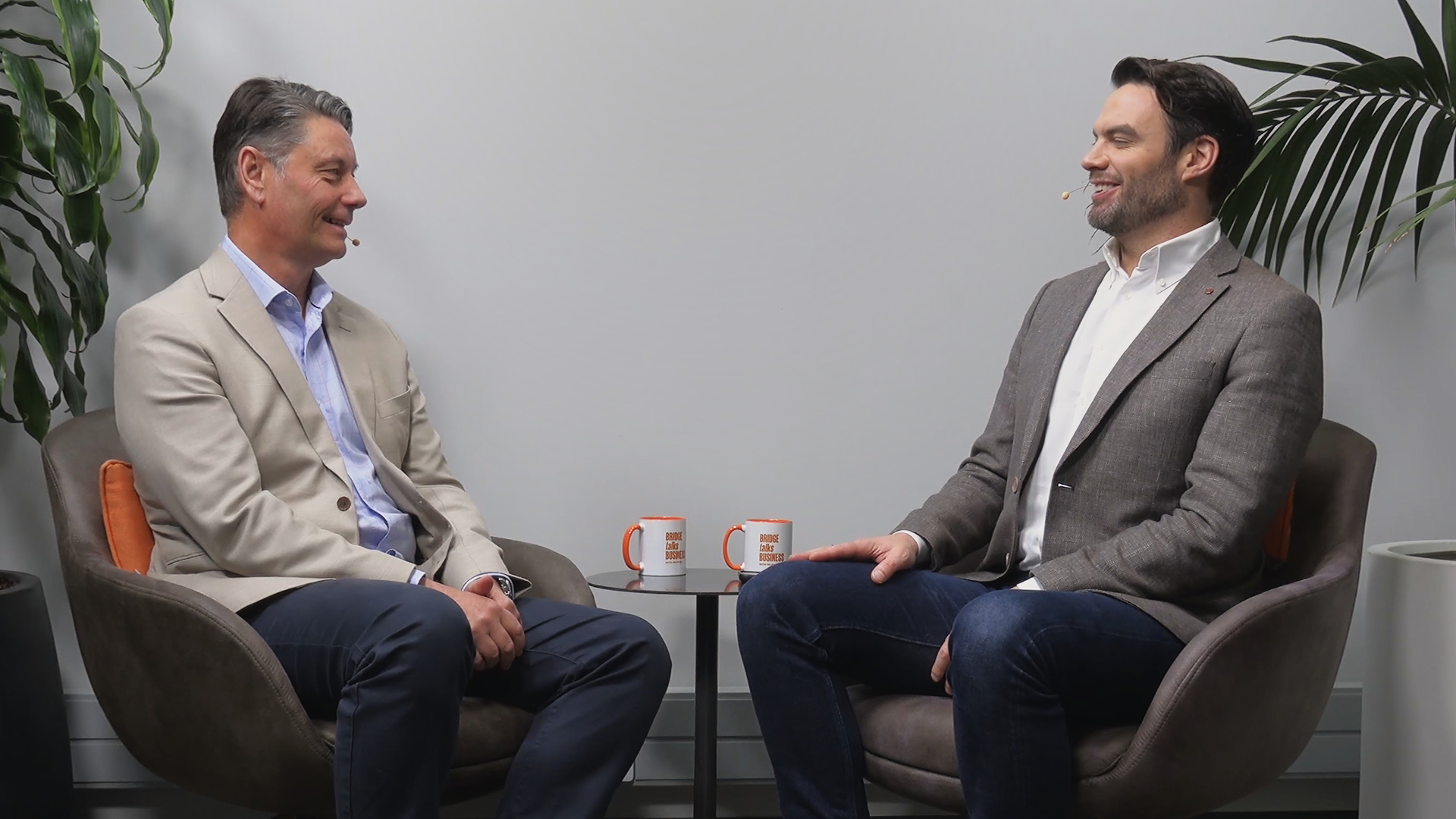

What can past crises teach us about the pressures facing financial markets today? Milford Investment Analyst Katlyn Parker talks with Ryan Bridge about the rapid rise in US government debt, the bond market’s demand for higher yields and the renewed inflation threat from rising oil prices. She explains where vulnerabilities are emerging, what could turn a market repricing into something more serious, and why the consequences extend far beyond the United States.
Click here to download the MP3 file or listen to the podcast on your favourite platform:
Bridge talks Business: 29 September 2026
Episode Transcript
Ryan Bridge
Kia ora and welcome to Episode 95 of Bridge talks Business with Milford. Great to have your company. Bond market yields. They are on the march and that basically means the cost of debt for governments is going up. That’s a bit of a problem because so many countries have so much debt post-Covid. The question for today’s podcast is when does this become a big problem, a tipping point? And Katlyn Parker is across all the details. She joins us for a chat shortly.
First, here’s your top five business bits coming in from the past seven days.
1. Global manufacturing and services indicators are showing real resilience, although inflation remains a fly in the ointment. The US was the clear standout with both backward-looking and forward-looking growth indicators strengthening materially there. European growth has also continued to surprise to the upside – thanks to Germany and their fiscal stimulus package, which remains a key driver.
2. Australian employment data was modestly softer last week with the unemployment rate edging higher across recent releases. Despite this, it’s close to the RBA’s estimate of full employment and their focus remains taming inflation.
3. Central bank meetings across the Scandinavia region delivered mixed messages. A hawkish tone from the Swedes signalling the potential for further policy rate increases. The Swiss, the national bank there, left its policy rate unchanged at 0%, providing little indication of a move imminent despite growing divergence between Swiss rates and those elsewhere in Europe. Meanwhile, the Norwegians put rates up again, but hinted they are probably about done.
4. Global bond yields continued to move higher last week driven by a combination of stronger growth, high energy prices, and ongoing fiscal deficit concerns.
5. Finally, this week, attention turns to Australia with both the RBA meeting and a key inflation release on the calendar.
It is time for our feature interview this week. It’s been a long time since we’ve had her on the podcast but I am oh so happy that she’s back. Katlyn Parker, Investment Analyst at Milford, here to talk to us about the bond markets and the bond yields. Just a reminder this segment is informational only and should not be considered financial advice.
Katlyn, welcome back.
Katlyn Parker
Thank you.
Ryan Bridge
Where have you been my whole life? I’ve missed you.
Katlyn Parker
I’ve missed you.
Ryan Bridge
Alright, let’s talk about some big issues. So we’ve had, you know, we’ve got the bond market situation happening at the moment. We’ve had the GFC, which we’ve weathered. We had oil shocks in the ‘70s. We’ve had Covid. Big events that affect markets. Now that we’ve got the bond market situation happening, we’ve got oil bubbling away – how does all that sort of compare to what we’ve been through in the past?
Katlyn Parker
Yeah, look, history has shown us that it’s not actually the initial shock itself that determines whether it’s going to become a crisis or something more severe. It’s actually the underlying vulnerability that that exposes. And those periods that you mentioned, they were all quite different. In the 1970s, there was a huge oil supply shock that caused inflation and weakened economic growth. The GFC, the vulnerability that that exposed was the financial system and the excess of leverage that was within it. And then Covid, as we know, huge parts of the global economy shut down and huge supply constraints. And then if we look at where we sit today, it’s a completely different mix again. We have geopolitical tensions. We have energy risks. We also have a higher cost of capital, so higher interest rates that the market has become accustomed to since the GFC. And we also have elevated levels of US debt. So I’m not saying we’re going back to 2008, but it is a question of where are the vulnerabilities that another shock could actually translate into something more serious?
Ryan Bridge
Every time I read another bond yield peak – you know, we’re hitting highs we haven’t seen since the early 2000s or in some cases, the 1990s in some countries. The US has what, 40 trillion dollars worth of debt now? They’ve hit a new high there. You know, when does one plus two start to equal disaster?
Katlyn Parker
Yeah, look, that is $40 trillion. That is a huge headline number. But there isn’t necessarily a magic number where the debt equals crisis. It’s more about the trajectory of those debt levels. And the US, it has been running fiscal deficits about six, seven percent of GDP, even when economic growth has been pretty solid. And that’s quite important that borrowing has become a lot more structural and it’s not something that just rises when there is a recession or a period of financial stress. But it’s coming at a time where you have the US government issue in debt when they also are refinancing debt that they issued a few years ago at ultra-low interest rates. So that is increasing the interest burden. And the US, I think it’s about $1.2 trillion the amount that they’ve paid in interest year to date. So that’s more than they’re spending on defence. And for a long time, the US did benefit in terms of the rate that its economy was growing was a lot higher than the effect of interest rate it was paying on its debt. But now that gap is narrowing and that does reduce your fiscal flexibility. And also it makes that debt arithmetic a lot a lot more challenging. But the US does have structural advantages. It borrows in its own currency. It’s the dominant reserve currency in the world. And the US Treasury markets are the deepest and most liquid bond markets in the world. So it’s not a question of can the US fund itself? It’s at what price is it going to have to do so?
Ryan Bridge
Does that mean that we’re more vulnerable, that countries other than the US are more vulnerable?
Katlyn Parker
Yeah, look, whatever happens in the US interest rates, it does have a flow on effect across the world. It’s the most important benchmark, essentially, for all asset valuations globally.
Ryan Bridge
What is actually going on with the bond market, the volatility and the yields? Because I’ve heard a lot about the private issuance of bonds. This is like AI companies issuing, trying to get money so that they can invest. That’s sort of competing with the government bonds. And this is pushing up the yields that you’re having to pay to get the debt.
Katlyn Parker
Yeah, so look, last week there was a lot of headlines in terms of the US Treasury auction, if we take that first of all. So there was a bit of a trifecta last week. So within a day we had really strong economic data in the US. Oil prices surged on the back of geopolitical tensions. And also we had the US Treasury issuing more debt into a market that was met with weak supply. Oil prices are very volatile, as we know, and they did since retrace. And bond yields did stabilise a bit. So it is just a good illustration, I suppose, of the impact of the change of inflation outlook has on US Treasury yields. But one thing that has really changed and is important to note is the marginal buyer of US Treasuries. So if we go back to the quantitative easing era, the US Federal Reserve itself was a large, relatively price-insensitive buyer. And now it’s actually private investors that are having to absorb a lot more of this supply, and they’re a lot more price-sensitive. So it’s not a case of I would look at one or two weak Treasury auctions as this is a crisis in confidence. It’s actually the buyer is now a private investor who is saying, “Hey, I am willing to buy this US debt, but I want to be compensated for it”. There are risks around inflation. There are risks around how high interest rates are going to have to go. So those investors want to be paid for those risks. So again, not a case of can the US fund itself. It’s at what price it is going to have to pay up to do so.
Ryan Bridge
What about oil? You mentioned the price of oil has been tracking up. I mean, it’s been going up and then it came back. And now it’s sort of on the march again and jumping around, you know, whenever the White House opens its mouth. So what is the difference between the 1970s and the oil shocks that we saw then and what we’re seeing play out now?
Katlyn Parker
There’s a lot of parallels in terms of energy is actually the quickest way a geopolitical shock can feed into the broader economy. But there’s definitely a few differences that I would note. Number one, the global economy, it is less sensitive to oil. We’ve more diversified sources of oil. Countries have far greater strategic reserves. And also we have central banks around the world that have inflation targets in their mandate. So the global economy as a whole is more resilient to oil versus how it was in the 1970s. But it does create this really difficult trade off where you have higher oil prices impacting inflation, sending it higher. And then on the other side, that’s weakening household balance sheets and weakening economic growth. So the question, and what central banks are trying to do, is to see how much inflation they can actually tolerate and how much is actually going to become embedded. And what’s quite interesting is oil is now just not a story of the impact it has on energy. It’s actually a bond market story in terms of what does that mean for inflation and interest rates?
Ryan Bridge
You’ve mentioned twice now that for the US, it’s not a question of whether they can fund themselves or fund their debt. It’s at what price? Is there a price where you go, yeah, catastrophe? Where they say, no, we can’t.
Katlyn Parker
There’s not a specific price. It’s more when we start to see the impact of a weak Treasury market go into other parts of the financial system. So there’s a few things that we will be looking out for and watching. Number one would be persistent, weak US Treasury auctions with investors increasingly demanding higher and higher yields to get involved. Number two is the plumbing underneath the US Treasury market. And that includes the repo market where a lot of financial institutions can lend and borrow cash against US Treasuries. And if we start to see that market become more difficult and quite expensive, that would be something that would be a bit of a red flag for us. Number three, swap rates and their relationship with US Treasuries. Again, if that becomes quite unusual, that would show that there is spillover and concerns around the US debt.
Ryan Bridge
What about US Treasuries – what about the idea that they are not the safe haven?
Katlyn Parker
Yeah. And critically, that’s probably one of the most important things to watch is what happens in periods of financial stress or in periods of crisis. How does US Treasuries act? Because ultimately they are the world’s safe haven assets. So if you have periods of stress and investors are not willing to move into US Treasuries, that’s a fundamental warning sign. But look, we do have rising oil prices impacting bond yields. But on the other side, we do have strong broad-based earnings growth and economic momentum that is quite supportive.
Ryan Bridge
So lots of things to take into account there. Katlyn, you will be watching all of those things very closely. And I will ask you when things are getting bad enough that we need to get you back in, alright?
Katlyn Parker
Sounds good.
Ryan Bridge
That was Katlyn Parker, Investment Analyst at Milford, talking to us about the bond markets and the bond yields. Great to have you listening and watching wherever you like to do so this week. Just a reminder you can like, follow and subscribe the podcast. Until next week, don’t forget to invest in yourselves.
Missed previous episode? Don’t worry! Click here to catch up now.