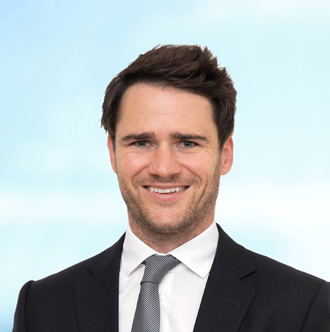
Picture above: Michael Higgins with the Empire State Building in New York (L), and with Callum Sinclair, Nick McGarrigle and Chris Prunty (R).
With equity markets lurching around like extras in Michael Jackson’s Thriller, it seemed fitting to land in New York on Halloween. I was eager to be back on the road, with a jam-packed agenda of 36 meetings across five days and three cities. We’d begin in NYC before heading across the country to Seattle, then San Francisco.
I’ve been fortunate enough to hand my passport over to a reliably miserable US customs agent four times in the past seven years. I’ve always returned with something useful, from fresh insights into companies we own in the Milford Dynamic Fund, to potential additions to our investment universe, or simply interesting ideas and observations to throw around with the broader team.
Being active in small cap investing is all about getting out into the real world. At a time when our workflows are becoming increasingly digitised, there’s still enormous value in getting on the road, meeting people and seeing things for yourself.
It’s often where you find an edge. I wanted to diarise a few insights from the trip, ideally without the influence of an overly verbose LLM.
As a Small Cap Portfolio Manager, you have to be a generalist, so I like a diverse schedule. One of the less appreciated benefits of a broad agenda is the chance to spot patterns. Have I seen similar business economics, competitive advantages or management behaviours in past market cycles? Sometimes it’s these observations, rather than anything particularly profound in the meeting itself, that spark an idea worth investigating.
Marathons, Midterms & Executive Orders
Early in the week, aside from dodging medal-bearing runners from the NYC Marathon in Midtown, we were also weaving between New Yorkers sporting their “I Voted” stickers. The midterms delivered a divided government, leaving Trump with a rather different political landscape to navigate. Reactions from the companies we met ranged from weary resignation to concerns that Trump might now fight hard, armed with an executive order pen.
One particularly interesting statistic stood out. Before the election, Democratic governors presided over states accounting for roughly 30% of the expected growth in US data centre construction and power demand over the next five years. Following the election, that figure has reportedly jumped to around 80%. An interesting wrinkle for an AI infrastructure boom increasingly dependent on political cooperation.

High-protein products were a prominent feature in US convenience stores.
Tacos, Protein & Flat Whites
Walking the streets, a few other consumer trends stood out. I can see why Guzman y Gomez threw in the towel on the US market, given the quality of Los Tacos No. 1 in NYC and the consistency, quality and sheer volume Chipotle delivers.
Then there were the corner stores, seemingly no longer content with stocking the customary Coca-Cola varieties. Instead, there was high-protein everything – Fairlife chocolate milk boasting 50% more protein than regular milk, or David Protein bars packing 28 grams of protein into just 150 calories. Both are well positioned for the growing GLP-1 weight-loss crowd, reinforcing some of the early trends Bega is seeing back in Australia.
And then there’s the coffee. Five years ago, ordering a flat white in America was less a coffee order and more a cry for help. Thankfully, things have improved considerably. Breville is one obvious beneficiary with its store-in-store concept at Best Buy.
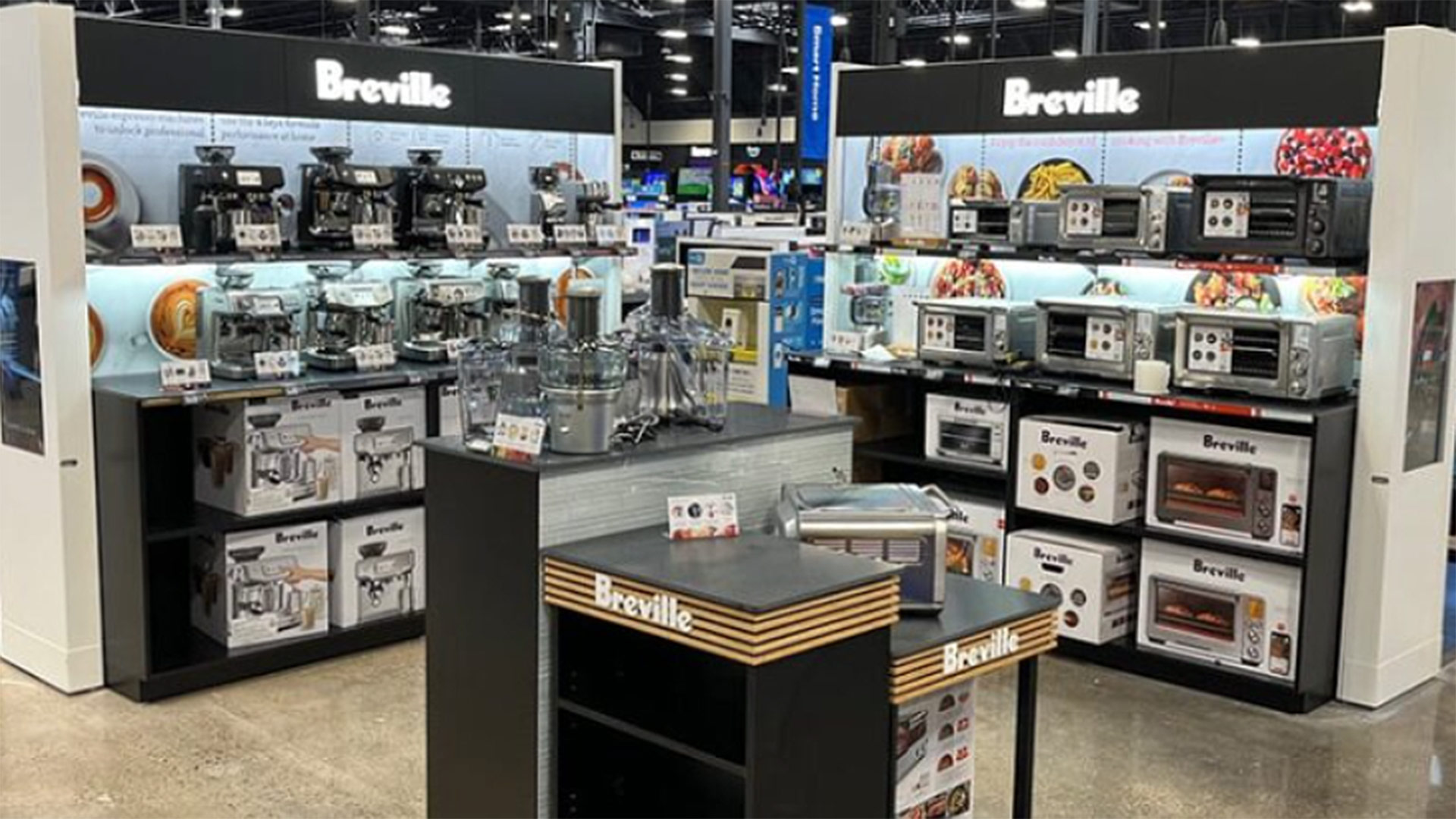
Breville’s store-in-store presence at Best Buy.
The American Dream (and the Australian Reality)
Having visited companies ranging from Y Combinator start-ups to multi-trillion-dollar behemoths, one thing was clear: the US remains, in my view, the best place in the world to start and build a valuable business. Talent is paid handsomely, venture capital pools are vast, and a relatively flexible hire-and-fire culture puts a rocket under innovation and entrepreneurs shooting for the stars.
I can’t help but contrast this with an increasingly uninspiring Australia. We’re blessed with a truly world-class resources sector, yet seem content to use the proceeds to fund ever more layers of bureaucracy and bloat. Meanwhile, the entrepreneurial spirit that should be driving our next generation of global businesses feels increasingly stifled. It’s a sad reflection that arguably our biggest global success stories of the past decade are a charismatic young bloke called Robert Irwin and a cartoon dog called Bluey. At this rate, our next great export will be Robert Irwin’s children.
AI: Show Me the Money!
Unsurprisingly, AI dominated just about every meeting. Internal messaging has evolved from the early days of “Token Maxing” towards a more thoughtful focus on cost-effective adoption.
Return on investment remains the trillion-dollar question, but the productivity gains are undeniable. More code, faster workflows and fewer employees. A striking example is the personal AI assistant Instinct (available in Australia and New Zealand). I used it to check in for every flight on the trip, simply through WhatsApp prompts. The company reportedly commands a US$10bn valuation. It has 14 employees.
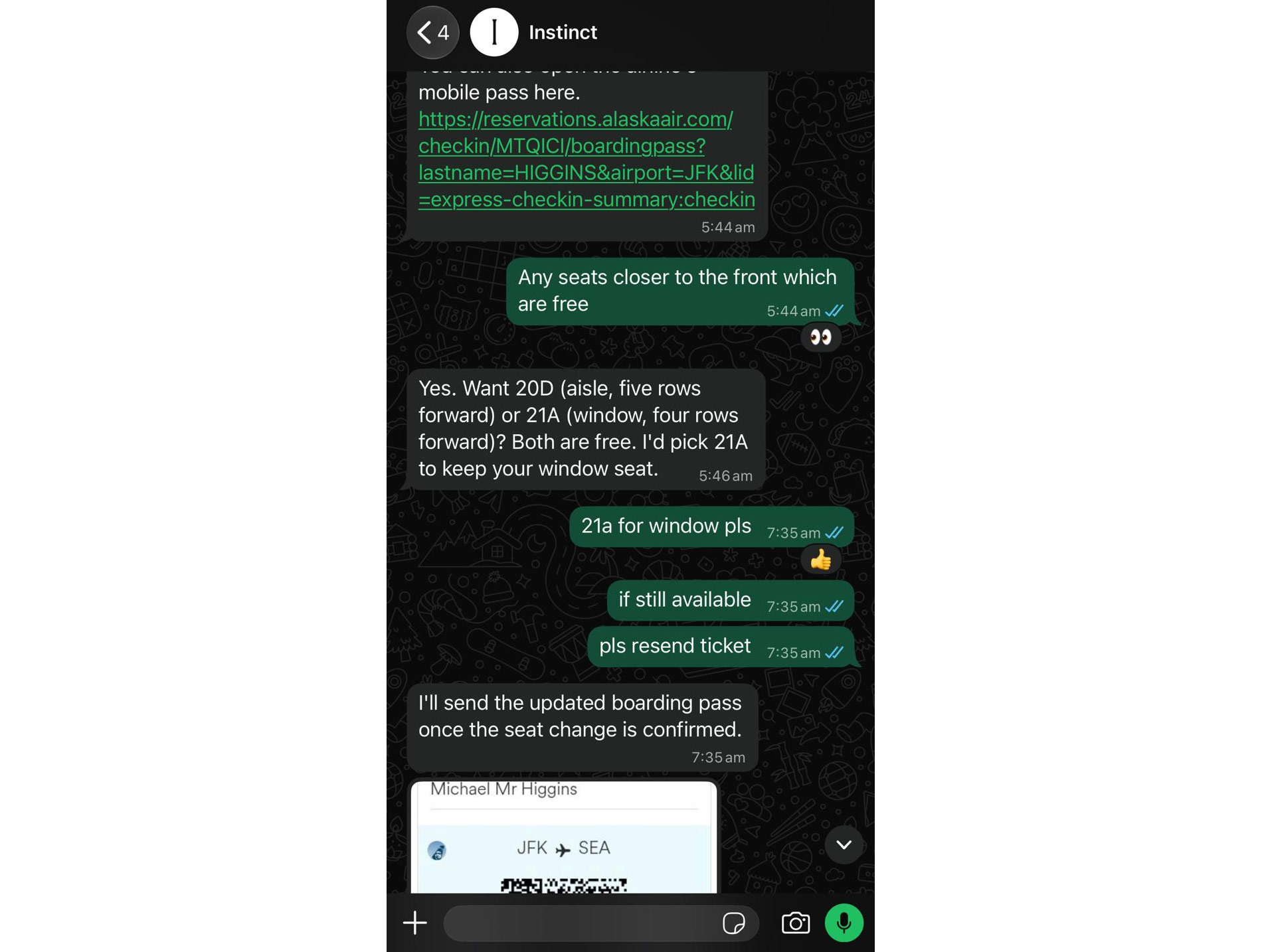
Instinct’s AI assistant in action.
The trip has also reshaped my thinking around technology incumbency. AI is attacking both sides of the business model. Agents threaten to bypass traditional software interfaces and undermine seat-based revenues, while inference costs could compress gross margins from 80–90% towards 50–60%, potentially worse.
Simply bolting on AI functionality or cutting headcount won’t be enough. Companies need to fundamentally rethink how they monetise their products and retain control of the customer relationship. Proprietary data is increasingly non-negotiable, but so too is a bold management team willing to make uncomfortable decisions, even if that means cannibalising the very business model that made them successful.
Thirty-six meetings and three cities later, I’m reminded why these trips are so valuable. Some observations will prove useful immediately, others might not make sense for years. Either way, it’s hard to replicate what you learn by simply getting out and seeing things for yourself. For an active investor, that’s the job: finding opportunities, testing assumptions and ultimately making better decisions about how we invest clients’ capital.
Disclaimer: Milford is an active manager with views and portfolio positions subject to change. This blog is intended to provide general information only. It does not take into account your investment needs or personal circumstances. It is not intended to be viewed as investment or financial advice. Should you require financial advice you should always speak to a Financial Adviser. Past performance is not a guarantee of future performance.