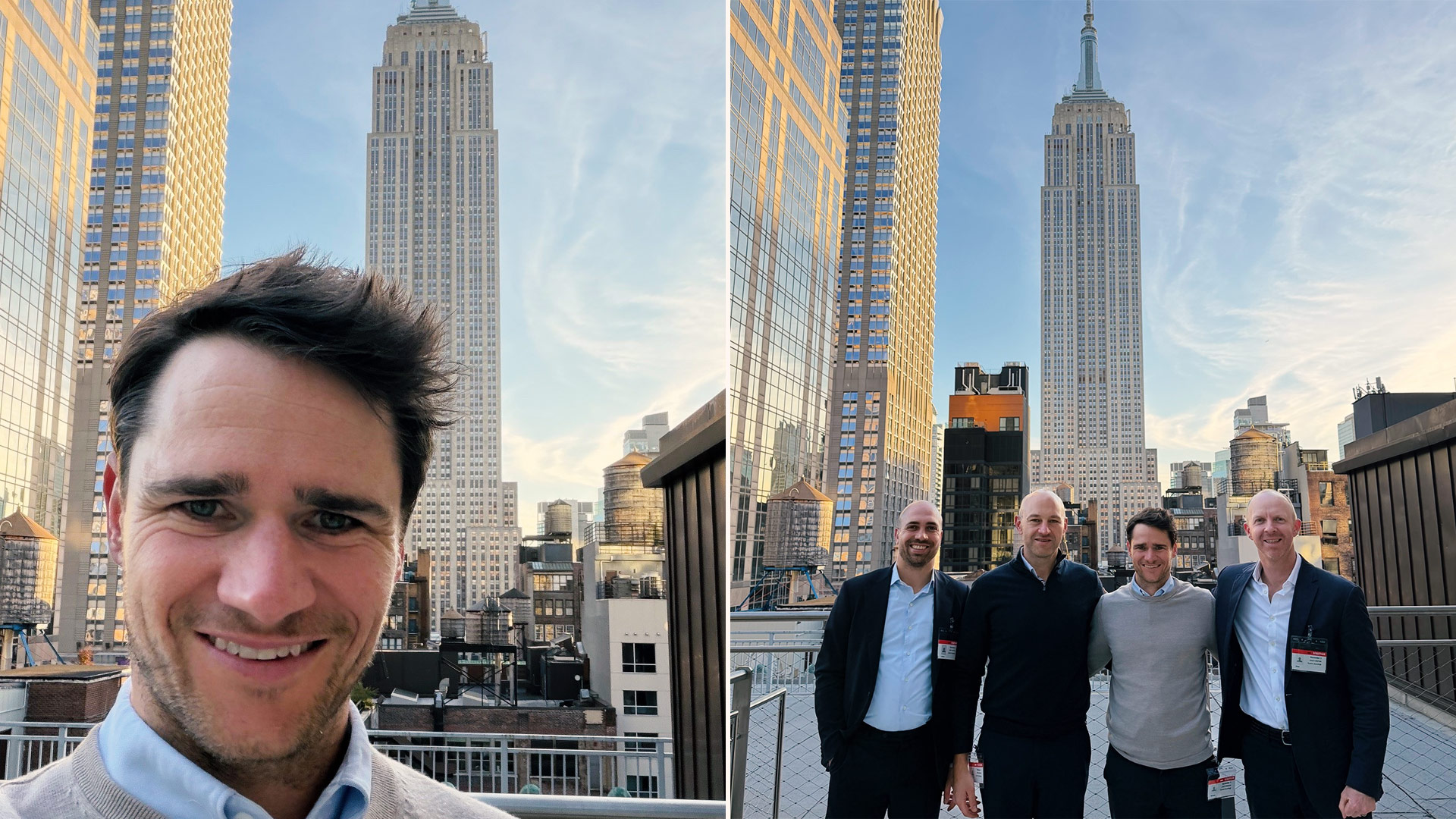
As 2026 draws to a close and we look ahead to 2027, how should we approach financial planning amid ongoing geopolitical tensions and global uncertainty? Milford Wealth Management Adviser Nicky Reid talks to Ryan Bridge about the key things to consider when setting financial goals for the year ahead.
Listen to the podcast on your favourite platform:
Bridge talks Business: 24 November 2026
Episode Transcript
Ryan Bridge
Kia ora and welcome to Episode 103 of Bridge talks Business with Milford. Lovely to have you listening and watching. Can you believe we are fast approaching the end of 2026? And that means New Year resolutions are just around the corner. Much of the focus, as always, is on health and fitness. But in one recent study, more resolution-setters picked financial goals over weight loss and muscle building. Today, Milford’s Nicky’s Reid has tips on how to make resolution reality. First, here’s your top five.
-
- Aussie labour market worries. Employment was weak again there. Jobs fell when a rise was expected and unemployment climbed to its highest level there since Covid. Layoffs speeding up, hiring slowing down.
- In New Zealand, the services index was solid with new orders leading it higher. That’s encouraging given the survey was done just before the election. The latest price data was mixed but doesn’t materially change Q4 inflation forecast.
- Out of the UK, data was soft overall – inflation in line with expectations – but below the Bank of England’s forecast. Bit of a softening in their labour market. The Reserve Bank watching for higher energy costs being passed on to other prices.
- US retail sales were solid, core spending well ahead of expectations. The US consumer remains pretty resilient for now.
- Finally, this week we get Australian inflation and global PMIs and the final New Zealand election result due Friday once the specials are counted. In the US, the focus is on the Fed’s preferred inflation measure, PCE, which is expected to be high given what we’ve already seen in consumer and producer prices.
Those were your top five business bits. And now it is time for the hot seat. Joining us today is Nicky Reid, Wealth Management Adviser at Milford, who is back with us again. And we’re talking New Year’s resolutions, planning and getting on top of your finances. Something we should all be thinking about at this time of year. Just a reminder, this segment is informational only and should not be considered financial advice. Nicky, welcome back.
Nicky Reid
Thanks, Ryan.
Ryan Bridge
Lovely to see you. Are you a New Year’s resolution kind of gal?
Nicky Reid
I am not usually a New Year’s resolution kind of gal. I’m kind of, I guess self-aware enough to know that generally, like a lot of people, I don’t actually put in practice. I might have great ideas – so I try to incorporate incremental change during the year rather than have one big epiphany that I need to do something different this year.
Ryan Bridge
You mean you’re clever. You’ve worked yourself out.
Nicky Reid
Ah maybe. Well, I guess at this age and stage, maybe I should have. (Laughing)
Ryan Bridge
Hey, we’ve had a lot of uncertainty and as people are coming to the end of the year, deciding what’s the plan for next year? We’ve had a lot of uncertainty in 2026.
Nicky Reid
Yep, 100%.
Ryan Bridge
Geopolitics, politics, markets, that kind of thing. How do you practically prepare yourself for uncertainty?
Nicky Reid
Well, financially, I guess there’s a few things that you can do. And a lot of it might sound really basic, but I think it’s worth sort of going through them. Number one, with uncertainty you want to, where you can, have some control over your life. And uncertainty is a natural part of life. There’s nothing we can do about it except prepare and be in a good position. So number one, do you have an emergency cash buffer? You should do. You should have three to six months of your essential spending. So that’s just the stuff that you need to pay the bills, get by. You should have more if you’re self-employed or have variable income, or if your household, for example, is reliant on one person’s income, where there’s a lot more pressure on that person to bring the income in the door. And so that’s an important first thing, is making sure that you’ve got that cash there. And a lot of people don’t.
Second thing would be to consider what your, I guess what your spending is. So do a budget or analyse your finances for say two to three months. And then put them into categories of your essential spending, your flexible spending, and your discretionary spending. And again, that takes you back to that first tip of having that emergency fund. If you know what your essential expenses are, and not many of us probably do, then you can make sure that you’ve got enough in the background to cope with the surprises that might come along.
Ryan Bridge
It’s almost like an audit. Like auditing your finances.
Nicky Reid
Yeah, look, that’s a number one thing. We’re all pretty bad at it, I have to suggest. But it’s a really good idea. What do you owe? What do you owe? Where are your risks? And so once you know what your essential spending is, you can then have that emergency fund. You should also look at what your subscriptions are that you’re not using and get rid of those. And if you need them again, you can always restart them. But getting rid of that non-essential spending and rationalising things again will make you feel a lot more in control of your finances.
And then you’re really considering, where are the risks in your life? So if we think about things like health insurance, trauma insurance, life insurance, where are the risks? What do you need to do to mitigate those? And consider who your dependents are, what your debt levels are, and making sure that you are covering those risks. Looking at your house and contents insurance as well. In New Zealand, we have had an awful lot of natural disasters, weather events. And as we know, everybody’s house insurance is going up. And it’s a big – and it’s probably going to be an incremental thing – going year-on-year because across the world, we’re seeing more weather events and the cost of reinsurance increases.
Ryan Bridge
So do an order, do a stock take almost.
Nicky Reid
Do a stock take.
Ryan Bridge
Figure out where your risk points are. Get your head in the game, basically, financially.
Nicky Reid
Yeah, really! Oh, 100%. Pay attention to it, and that will make you feel more in control of the things in a world where we can’t control a lot of the risks out there.
Ryan Bridge
What about staying optimistic? Because I think one of the things people, if they even just thinking about doing what you’re saying, might start to feel a little bit overwhelmed by it all.
Nicky Reid
Yeah, absolutely.
Ryan Bridge
So going into a new year, setting a resolution maybe, how do you keep optimistic about all this information?
Nicky Reid
Making new year’s resolutions fundamentally, or looking ahead and trying to start making a plan, that’s great. The optimism is what we should be having, but having a plan and putting structure behind it. Finding out what are your goals. So where are the gaps? What’s the thing that’s keeping you up at night? And maybe that’s your resolution for 2027 is, do I worry about the unexpected bill if the roof leaks or if my car breaks down? You know, if I have a gap in my income for three months, can I cope with that? Figure out what the thing is that you want to fix and then put some actual goals around it, i.e. making it an automatic thing as well. So if it’s, I want to pay off my credit card by June next year, how much do you owe? Work out how much you need to do. Make it automated. If you want to increase your savings again, automate your savings. And, you know, optimism is terrific and we should all be optimistic. We live in a great country. We are very fortunate. Even if you’ve had a challenging year, it doesn’t mean that 2027 is necessarily going to be as challenging or 2028. And you can only control what you can. So I think that’s a really positive way to look at it.
Ryan Bridge
I like the sound of that because psychologically, like anything in life, if you start to address something – if there’s something coming out every month or every week that’s starting to address that – you’re going to lose less sleep about it, right?
Nicky Reid
100%. You’ve got a plan. So you’ve recognised what is the thing that’s worrying me? What do I need to fix? And then put a plan in place. And I think that’s why, as I said, I’m not one for New Year’s resolutions because actually you’ve got to keep it going. If you just do something in January, you know, if you don’t continue it for the other 11 months of the year, it’s not going to provide you with the results that you’re wanting. So it should be an incremental automated thing so that you are making those differences and you’re just going to feel so much better about life.
Ryan Bridge
Nicky, we’ve had you on the podcast many times now. So our audience knows you as a Wealth Management Adviser, which means that you know what you’re talking about, but do you follow your own advice or what’s the piece of advice that you tell your clients when it comes to planning and not necessarily predicting the future but preparing for it?
Nicky Reid
I think, more than anything, knowing what you spent is the number one, because how can you plan for retirement if you don’t know what you need when your income stops and you’re out there having a great life doing the travel, spending time with the grandkids, doing all the really important stuff, what do you need to live on? And if you don’t know that, you can’t work out how much you need to retire on, and then you can’t work out during your planning part of the phase before you hit retirement, you can’t work out if you’ve got a gap there that you need to address before you decide to walk off into the sunset and have the rest of your life without working.
I would have to confess, I don’t know exactly what I spend. I do know that I’m thankfully in a position where I’m a saver, and that really helps, I guess takes the onus off having to be quite so budget conscious, but if someone said to me, what are your essential expenses? I actually couldn’t tell them off the top of my head. So I know that they’re not too bad, because as a financial adviser, we tend to be pretty good about this stuff, but that would be the number one thing, would be know what you spend, and then you can see where the gaps are as well, where maybe there’s money that you’re spending, especially if it fits into that flexible or discretionary bucket. They might be places where you can rationalise things and start paying down debt, especially that high-interest debt, or you can save more, you can increase your KiwiSaver contribution so that you can get closer to your goals, no matter what they are.
Ryan Bridge
See, what I’m hearing from this entire chat, Nicky, is somebody who likes to talk a big game and then zero follow through. (Laughing)
Nicky Reid
Oh no, I’ve been…
Ryan Bridge
Don’t worry about a New Year’s resolution. You can do it, you can start in March, but it’s true, isn’t it?
Nicky Reid
Yeah, you can.
Ryan Bridge
And you do bits at a time.
Nicky Reid
Absolutely, so by all means, start now, start in January, start whenever, but start – and continue more than anything else. Don’t let your changes or what you need to do better be something that is a discretionary effort for you, so it takes away that laziness, or at the end of the month, if I’ve got more, then I’ll put that into my savings or my KiwiSaver or into my investment funds. If it’s already gone out, it’s the old adage, pay yourself first. And so doing that is really crucial, I think. I have made my financial mistakes in the past in my younger years, and I tell you there is nothing more motivating to secure your own financial future than doing what I do every day, talking to people about their retirement.
Ryan Bridge
Well, we are very lucky to have you talking to us again, Nicky, thank you very much for being on the podcast.
Nicky Reid
My pleasure, thanks, Ryan.
Ryan Bridge
That was Nicky Reid, Wealth Management Adviser at Milford, talking to us about savings, spending and getting on top of your financial position. Thank you so much for listening. As always, you can like, follow and subscribe this podcast wherever you like to listen. We love you doing so. Until next week, don’t forget to invest in yourselves.
Missed previous episode? Don’t worry! Click here to catch up now.