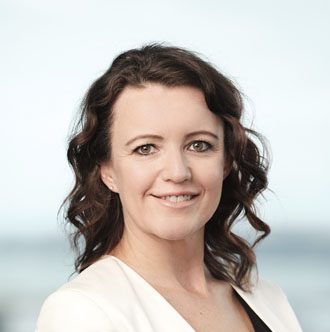
How much do I need, have I got enough, and how long will it last? These are key questions all of us face when planning for retirement. So, is there a magic number we should be working towards? Financial Adviser Julie Shacklady talks with Ryan Bridge about the variables that affect the answers to those questions, and shares some of her own investing journey story.
Click here to download the MP3 file or listen to the podcast on your favourite platform:
Bridge talks Business: 3 February 2026
Episode Transcript
Ryan Bridge
Kia ora and welcome to episode 61 of Bridge talks Business with Milford. Today, we’re turning the tables. I’m going to ask a financial adviser about their retirement plans.
Julie Shacklady is with Milford and helps clients figure out their plan, their goals. When to retire? How much do I need? But when does Julie plan to retire? And what does she want out of her twilight years? We’ll ask her in just a second.
But first, here’s your top five business bits from the last seven days:
● Number one: Trump finally announces his replacement for Fed Chair Jerome Powell. Kevin Warsh is the nominee, a former Fed governor. He has inflation-fighting credentials, although we are unlikely to see them this year. Trump, of course, wants lower interest rates to win the midterms.
● Number two: Precious metals shot up, then collapsed by week’s end. This is emblematic of the speculative behaviour that we’re seeing across asset markets over recent years, even as that headline share market index moves continue to be muted.
● Number three: Optimism around New Zealand’s economic recovery continues to gather steam. ANZ’s business outlook shows activity and consumer confidence both up.
● Number four: The AI trade continues to reward “picks and shovels” – ie, semiconductors – whilst punishing software stocks.
● Number five: This week we have central bank meetings up the wazoo: Australia, the UK, and Europe. Australia’s inflation is rising, the UK’s is falling, and Europe is pretty much at target. As always, the language around these announcements will be watched closely.
Alright, let’s crack into this week’s episode. I’m delighted to be joined for the first time by Julie Shacklady, who’s a Financial Adviser at Milford. Just a reminder, this segment is informational only and should not be considered financial advice. Julie, welcome to the podcast.
Julie Shacklady
Thank you for having me.
Ryan Bridge
Great to have you here. Alright, so I want to be really comfortable in my retirement. I want to be able to travel once a year overseas. I want to go out to restaurants. I don’t want to be stuck. So, how do I know how much I need?
Julie Shacklady
Well, nobody wants to struggle in retirement. These are the years where we are supposed to be enjoying ourselves. A relatively modest retirement in New Zealand needs about $600 a week, whereas a more comfortable retirement could require up to $1,400 a week. The government superannuation isn’t quite enough for a comfortable retirement, and that’s why we’re seeing more Kiwis investing to generate an income to support their lifestyle in retirement.
Ryan Bridge
So how do I get that much? How do I actually do it? How do I make sure that what I’m saving at the moment – what I’m investing – is going to get me there?
Julie Shacklady
That’s a good question. First of all, it can be helpful to work out how much you think you’re going to need in retirement, certainly for those who are closer to retirement. You look at three areas:
1. How much are your day-to-day expenses likely to cost in retirement? That’s movies, dining out, petrol.
2. Then factor in larger expenses like travel or replacing your car.
3. And then other considerations such as the rising cost of medical insurance as well.
So, once you know how much income you’re likely to need, you can almost work backwards then, and work out how big the pot needs to be at retirement.
Ryan Bridge
Alright Julie. So, you talk about the price of stuff like movies. How do I work that out? Because movies are so expensive… do I have to work out all these costings in tomorrow’s dollars?
Julie Shacklady
I mean, to be honest you’ll never work out exactly how much things are going to cost in 20, 30, or 40 years’ time. The best you can do is just save as much as you can, to be honest, so that your pot is bigger at retirement. So, doing things such as saving where possible, increasing your KiwiSaver contributions where you can, and also looking at things such as your fund selection will have a big impact. A fund or a KiwiSaver which has got more shares in it has more chance of growing at a rate greater than inflation over the longer term. The trick is just to do as much as you can; then you can start to work out the finer points as you get closer to retirement.
Ryan Bridge
How much do I actually need to get going – to get started and investing in something like a Milford fund for example? Is there a minimum?
Julie Shacklady
Well, there’s no minimum for KiwiSaver. Anybody can open a KiwiSaver with nothing and get started. For our non-KiwiSaver funds, there is a minimum of $1,000 per fund. And if you’re interested in our advice and management service, the threshold for that is $500,000.
Ryan Bridge
Julie, tell me about your investing journey. How did you get started, picturing what you want your life to be like and then getting on the road?
Julie Shacklady
Yeah, well, I think anybody – including financial advisers – wishes they had started earlier. It’s never too early to start. I made some pretty questionable investment decisions before I got into finance in my thirties, trying to pick my own shares. It is quite difficult to do, but I feel like it’s become a lot easier with the introduction of KiwiSaver and PIE funds like we have at Milford as well, where a manager takes care of it all for you. It’s easier than it’s ever been. And also, it’s never too late to start.
Ryan Bridge
Have you always been interested in investing, or is your interest more out of a necessity? Like for me, it’s more about “this is what I want in life and this is kinda how I might get it”. What’s your take on that?
Julie Shacklady
I think I knew from quite an early age that I was going to have to make some firm decisions myself about planning for retirement. I remember when I was 18, my dad said to me I should buy a house. Which just seemed mad at the time because I was so young, but I really wish I had! It really would have got me on the track to retirement – or early retirement. So you know, I have always had an interest. It is, of course, easier when you’re working in finance, but there’s a lot of information out there now that wasn’t available before. And so, as mentioned before, it’s easier than ever before, I think.
Ryan Bridge
And do you have a goal? I know a lot of people have a goal – “I want to retire by 50 or 55”, or whatever it might be. Do you have one of those?
Julie Shacklady
Not a firm goal. 60 to 65 sounds good, but to be completely honest, I really enjoy what I do at Milford. So if I have to keep working for a few years longer, I’m perfectly okay with that.
Ryan Bridge
Ah, that’s the right answer! When you’re advising people, is that a common thing that people say, “this is what I want my life to be like,” or do they say, “this is when I want my work to be over”?
Julie Shacklady
A lot of new clients come to us with a firm idea about when they want to retire; others aren’t so sure. Milford advisers are really experienced when it comes to retirement planning, so we see all scenarios. We also have some really useful tools, such as our projections tool, where we can show a client how much income they might be able to take in retirement without eroding their capital, if that’s the intention. And I know our clients really enjoy having access to that tool.
Ryan Bridge
Julie, it’s good to know that you’re there if ever I need to talk. Thank you very much for coming on the podcast today.
Julie Shacklady
Thank you for having me.
Ryan Bridge
That was Julie Shacklady, a Financial Adviser at Milford, talking to us about not just what you can do about your retirement, but also a little bit about what Julie did for hers, which is pretty cool. Thanks so much for listening to this episode. Don’t forget you can like, follow, and subscribe wherever you get your podcasts. Until next week, don’t forget to keep investing in yourselves.
Missed previous episode? Don’t worry! Click here to catch up now.