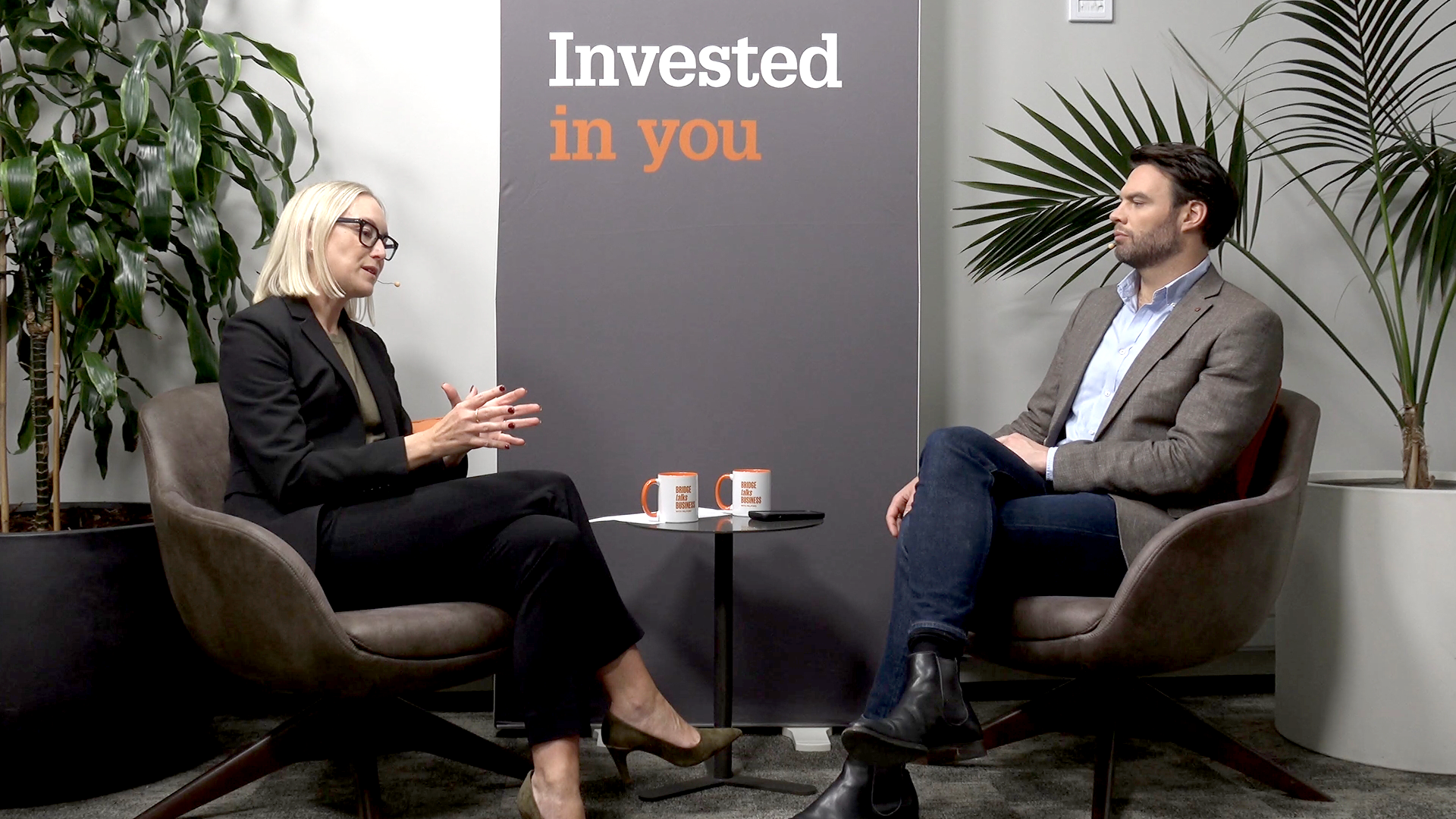
Trust can take years to build and moments to lose. Dr Jacki Johnson, board director, researcher and author of When the Mirror Shatters, joins Ryan Bridge to discuss the leadership lessons she learned through the Christchurch earthquakes, why values are revealed through behaviour rather than words, and how organisations can build trust while balancing the needs of multiple stakeholders.
Click here to download the MP3 file or listen to the podcast on your favourite platform:
Bridge talks Business: 8 September 2026
Episode Transcript
Ryan
Kia ora and welcome to episode 92 of Bridge Talks Business with Milford. Today we’re talking about the all-important topic of trust and what happens when it comes under pressure.
First, something different. Here’s your top five election issues for 2026.
1. This is from the Ipsos Monitor. They speak to a thousand Kiwis and monitor their thoughts. This is from July. You guessed it. Cost of living is on the top. Cost of living is the number one issue. Whoever wins will win the election. Nothing is more important to voters than paying for the groceries.
2. Almost 40 percent of Kiwis rate healthcare as their second biggest issue. How do you rate your experience at hospital? How long is the wait to see a doctor? We have a public health system in New Zealand which means this stuff is very political.
3. In July unemployment overtook petrol prices as the third biggest worry. If you’re looking for a job, the unemployment rate and who you think is better at controlling it could swing your vote.
4. Interestingly, petrol prices fuel fell 10 percentage points from 26 percent in May to 16 in July as prices came down off their peak from the war.
5. Finally, the issue no one really talks about, but everybody judges trust, likeability, the candidate factor. When you look your leader in the eye on the television, do you trust them or not.
All right, it’s time for our feature interview. This week, we’re going to speak to Dr. Jacki Johnson. Dr. Jacki was the Chief Executive at IAG New Zealand, big insurance company during the Christchurch earthquakes.
We all remember how devastating that was. So, what was it like leading such a big organisation and trying to stay true to values at a time like that? We’re going to answer those questions with Dr. Jacki.
Just a reminder, this segment is informational only and should not be considered financial advice.
Jacki, welcome to the podcast.
Dr. Jacki Johnson
Thank you so much for having me, Ryan.
Ryan
Lovely to have you here. Now we were just talking about your history with New Zealand, you have a very strong history with New Zealand. You were Chief Executive IAG New Zealand, but also Head of the Insurance Council. At quite an interesting and crucial time for our country insurance-wise, right?
Dr. Jacki Johnson
Yeah, so from 2010-2016 I was living here in New Zealand and I think, I thought I knew a lot about natural disasters from other part of my insurance career.
You know, bushfires, floods, cyclones, never earthquakes and so working through what the country faced during that time and just seeing, resilience can be an overused word, but that’s what I saw and I saw community, I saw resilience and I saw culture play out that differentiated New Zealand from Australia and I think it was a privilege to be a leader at that time.
Ryan
You talk, I mean you’ve mentioned values already, businesses that come to the market with values and talk about them a lot, talk a big game maybe about their values and your book is about when that kind of illusion might be shattered. That sort of a picture that you paint about yourself is undone.
Dr. Jacki Johnson
Yeah, yeah and I think it happens on a personal level and a business level as leaders because the more senior we get, the reflections we might get and not what we might have got when we were just out there.
I think a great quote when I was doing interviews for my research, was this person said to me, how can directors understand all their stakeholders when they congregate in the airline lounges.
It sort of says it, about you can say you’ve got values but if you’re not really understanding what society expects of you, are those values really mirroring what stakeholders need of you.
For us to be successful, you know I looked at listed companies, but markets correct if you’ve hurt stakeholders along the way. Because there’ll be more regulation come in to try and minimise that harm, and so it’s not values on a poster. It’s really the values and how you keep people accountable for their behaviours so that you’re living those values.
I think I saw that, you know, Christchurch was amazing what people did to try and navigate through so many unknowns, and you could see those that were living their values and those that really weren’t on the ground that much.
Ryan
How much of it is to do with personalities, you know, like I was I think of the Mayor, Mayor Bob who was instrumental and helping Christchurch through that period. How much of it is about, you know, a big personality and someone that they feel they can trust all that has genuine compassion, perhaps.
Dr. Jacki Johnson
Yeah, I think you’ve hit on a really good word compassion about how much people sense you care because that links to trust.
I’m an extrovert by nature and I’d love to be an introvert at times. And I think you can have some very introverted smaller personalities that still build that trust through the compassion they show. So, I think you’ve hit it really well. It’s the compassion and how much do you care.
So, for me, being on the ground most of the time, two days a week in Christchurch, particularly through those early years, just showed I cared. But it was also about hearing other perspectives and listening. And I think you can have values that say you do that, but your behaviours need to show it. Bob’s a great example. He did that.
Ryan
He did, didn’t he? He was always out in a military Unimog somewhere.
Dr. Jacki Johnson
Out in the liquefaction.
Ryan
Exactly. Exactly. So, if you’re a business leader, if you’re a director, how do you make sure that you’re living the values that you’re talking about?
Dr. Jacki Johnson
Yeah, one, it’s about being clear what the behaviours are behind those values.
And one of the things that my Christchurch period led to me being fascinated about why some companies do better than others are trying to balance all the stakeholders needs. It’s not easy.
And because you’ve got investment capital needing to support your business for insurers, it’s a reinsurance capital. Employees expect things of you, customers, the regulators.
So, you’re trying to balance all these interests. And I think what we need to then do is think about, well, how does that then play out in this value and trust? And one of the key things is value is described differently by different people. It’s not always about the money. And so, if I think about Christchurch, there was this push and you might recall, get things built quickly. But if the ground was still shaking, which it was liquefaction still coming up in people’s living rooms, unless you really worked with scientists and Ngāi Tahu were fundamental as well, because they brought indigenous worldview to long term decision making. That probably we were all rushing ahead and it was like, but what will this look like in the long term?
I think that goes to the heart of value and values. So, unless you understand how value is created, it’s very hard to say you’ve got values. Because what are your behaviours that’s helping that value if that makes sense. So, I think the play on those two words is really important.
Ryan
Have you been back to Christchurch lately? We are very proud.
Dr. Jacki Johnson
The Stadium!
Ryan
But the whole city.
Dr. Jacki Johnson
Yeah, I’m going in December as a family. We’re doing a New Zealand trip with my daughter, son in law and our little grandchild. I’m really looking forward to it because we had such a vision back 10 years ago. And what I hear is it’s vibrant, things are happening, the stadiums open.
Ryan
All of that good stuff.
So how much, let’s be honest, businesses exist for shareholders primarily. There for a bottom line, there to make money and to create value. How do you kind of marry that with more, you know, you’ve talked about compassion, you’ve talked about empathy, all of those other values that I’m sure leaders have naturally. How do you marry those two things together?
Dr. Jacki Johnson
I think about a business is there to solve a problem and then investors get really confident with business that can solve a problem because they’re going to be there in the long term to give returns.
I was co-chair of the United Nations Financial Initiative globally, which was insurers, banks and investors. And to see investors starting to really understand the volatility that gets created in share prices if people don’t lead in a way that’s delivering the value to employees, customers, their communities.
You know, it got called ESG, which I think was an appalling label and ratings, that then guided everyone to look at policy statements. But really, what we’re talking about is how does strategy get decided and how do you govern?
If you take strategy as an ethical choice about what are you pursuing? There’s nothing wrong with a low-cost strategy. But are you extracting value more than you’re giving it? It becomes the ultimate question.
I think over a period of time, there can be an alignment of interest for the investors who you have a fiduciary duty to give a return to. I did investor ratios just like everyone else and you couldn’t be out there being Pollyanna. You had to have a real sense of how the returns were going to happen. And when you pretty much wiped out the balance sheet with all the earthquakes, you had to talk a lot. You think in insurance, you’ve got reinsurance capital. That’s global money. And here New Zealand’s premiums were such a small part of the world premium pool.
But I think in the end, reinsurers bought 25 billion dollars into this country to rebuild Christchurch. They would never have made that much money.
So, to keep reinsurers interested in our country, they had confidence we were making decisions for the long term, that houses would be built in a way that could be ensured longer term. And the policies and the contracts could deliver to that.
I think there can be an alignment and probably in my finance career, I’ve seen it. But you can’t be naive. You have to then think about, the awful word of trade-offs. But how do you get everyone to understand the value that can be created in the long term?
Ryan
Fascinating stuff. Can’t wait to finish the book. Lovely to have you on the podcast.
Dr. Jacki Johnson
Thank you. Really valued talking with you. Thank you.
Ryan
was Dr. Jacki Johnson, author and former Chief Executive at IAG New Zealand, talking to us about leadership, about values, and about being a boss who walks the talk.
Just a reminder that you can like, follow and subscribe this podcast, wherever you like to listen. Until next week, don’t forget to invest in yourselves.
Missed previous episode? Don’t worry! Click here to catch up now.