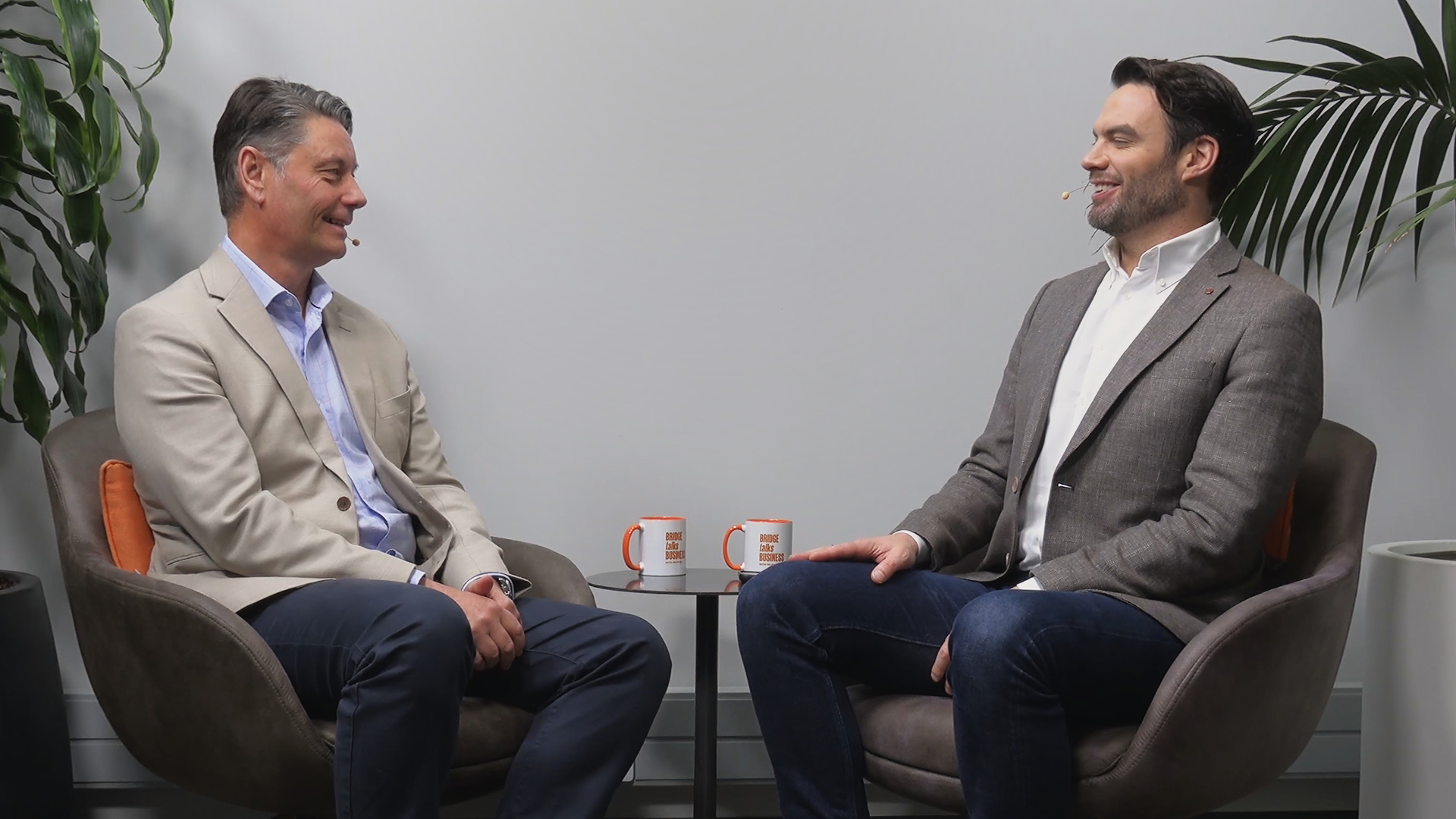
Healthcare is a broad and complex area of investment, with numerous market segments to assess and consider. How do you break it down, what are good areas for investment, and what areas should be avoided? Milford Senior Investment Analyst Victoria MacLean talks to Ryan Bridge about key considerations, including policy impacts, levels of innovation, spending cuts, and the implications of AI.
Click here to download the MP3 file or listen to the podcast on your favourite platform:
Bridge talks Business: 10 February 2026
Episode Transcript
Ryan Bridge
Kia ora and welcome to episode 62 of Bridge talks Business with Milford. They say if you wanna stay in business, make stuff people need, not just stuff people want, and nothing screams need more than healthcare. And the same principle could apply to investing in those businesses. Today we’re gonna break down investing in one of the great defensive sectors. It turns out not all life-saving bets are created equal.
First, here’s your top five business bits from the last seven days.
● Number one: We got Kiwi labour market data last week showing a stronger pace of employment growth and a pickup in the participation rate, leaving the unemployment rate a touch higher. It was largely in line with the view that the economy is slowly on the up.
● Number two: On the other hand, US labour market data released last week did little to calm fears around weak job growth, despite the economy running hot. Job openings were down and unemployment claims were up. US payrolls data will provide more clarity for investors this week.
● Number three: Manufacturing business confidence was up in the US, which Trump will like. But signs of rising inflation pressures continue. Despite that, the Fed is expected to keep cutting interest rates two further times later in the year.
● Number four: The big US tech companies wrapped up their earnings reports last week. Profit growth is strong, but investors are still worried about that capital spending -potential overspending with AI.
● Number five: Investors are still worried about AI eating the lunch of software companies, because who needs them if AI can write the code. With so much uncertainty about how this might play out, investors are indiscriminately selling software company shares whilst continuing to buy semiconductor companies, the key beneficiary of AI capex spending.
Alright, let’s crack into it. We’re talking healthcare today in our feature interview. We’re speaking to Victoria MacLean, Senior Investment Analyst at Milford. Just a reminder, this segment is informational only and should not be considered financial advice. Victoria, welcome to the show.
Victoria MacLean
Thank you, nice to be here.
Ryan Bridge
Great to have you. So we’re talking healthcare today and it’s one of those sort of basics, isn’t it? I mean, we all need it at some point. So it’s kind of a safe bet. How do you break down – how do you figure out which parts of the market to get into?
Victoria MacLean
Yeah, well, it’s a great space because it’s so diverse. There are a lot of different segments to the market. So you’ve got your pharma companies, your biotech. You’ve also got all the equipment that you would need in a hospital or just sort of day-to-day healthcare. There’s a sort of more science-y side around life sciences. But you’ve also got the underlying themes and drivers for these companies. So you can think about it in terms of, how do I get exposure to growth from aging populations or from obesity, which is a big theme, or healthcare cost cutting is another one. And even AI more recently has been emerging.
So you have to think about that. And I think from an investment perspective, the key thing in all of it is understanding the different business models and understanding the opportunities and risks, because they do differ according to each of those segments. So I think that’s really important. And then the other layer is just policy and regulation, which is a really important consideration in the healthcare space.
Ryan Bridge
Because there’s a lot of regulation in healthcare.
Victoria MacLean
There is a lot of regulation, yip.
Ryan Bridge
And also a lot of it is government spending on healthcare.
Victoria MacLean
Yes, exactly.
Ryan Bridge
So, if they’re cutting back, then that’s not great for a business, that kind of thing.
Victoria MacLean
Yip.
Ryan Bridge
What are some areas of the market that you like – that you think are pretty hot?
Victoria MacLean
So “hot” is not necessarily what I like because that can be quite volatile, but areas that I think have good structural growth drivers and maybe some more – you talked about a safe bet at the beginning – the defensive characteristics where you can move through some of those risks. And one of the areas is medical equipment and technology. It’s an area where there’s quite a lot of innovation.
Innovation is what will drive the growth of a healthcare company relative to its peers, but it also can provide pricing power because you have some areas of medicine, particularly in equipment, that can be very commoditised. So your bandages, your plasters, your needles – all of those things – everyone can do them. Those are going to get price declines. Whereas if you are making surgical robots and no one else is making surgical robots, you have a much better competitive position that’s much more defensible.
And so that’s something that I like in the equipment space. And the other part there is particularly in equipment, if you can find exposure to areas where it’s a critical need, then you might have less risk from the spending cycles of governments or hospitals. Because if you’re a hospital looking to cut back because your funding has been cut, you’re not gonna be cutting critical surgeries. If you’re a consumer worried about how much money you’re spending, you’re not gonna be putting off your heart operation. You might be putting off cosmetic procedures, for example. So that’s quite a nice area of the market to get some kind of defensive characteristics.
The other area that has some similar aspects to that is what’s called life sciences and tools. And those are the “picks and shovels”, if you like. They’re the parts that go into the background in the system. So, they can be used in research, in the labs, in drug discovery, they’re used in drug manufacturing – they’re used very widely, and they have a nice business model because you sell a piece of equipment, but then you also sell the what are called the “consumables” that will go into that equipment and be used every day over and over again. So that’s called a razor blade model. It’s recurring revenue, it has good visibility. And typically with the healthcare equipment, you are locked into using that company’s consumables because they met the regulatory standards, they meet all of the requirements.
Ryan Bridge
What about – and we were talking about biopsies – and this is fascinating to me. So you need to have an intervention done into your body to check whether it’s cancer. And you’re talking about, or there’s this idea of a liquid biopsy – what is that?
Victoria MacLean
Yeah, so I think this is a really great example of innovation in healthcare and an area that meets a really high unmet and kind of critical need for patients. So at the moment, when you get a biopsy to check for cancer, either to check whether you have it or whether it’s come back, you will need to get a tissue sample from the tumour. Now, at best, that can be a very invasive procedure. At worst, it can be a very dangerous one. So that ranges from things like for colorectal cancer, you have to provide a stool sample; for lung cancer, you obviously have to take tissue for the lung, similarly with brain cancer.
Ryan Bridge
So it could actually do you more harm than good?
Victoria MacLean
It can do you more harm than cancer can. So in some cases, you wouldn’t get the biopsy because the risk is more likely to come with the biopsy than it is for the cancer.
Ryan Bridge
So how do you get around that?
Victoria MacLean
So there’s a number of companies that are developing what are called liquid biopsies, and they are based on a blood sample. And so your blood can have what is called circulating tumour DNA. So the test will test for this circulating tumour DNA to see whether it meets the levels that suggest that you have cancer. It’s very difficult to do because it has to be extremely sensitive. Otherwise you get too many false negatives where it’s telling you don’t have a tumour and you do.
So that’s been a challenge for the industry, but more and more we’re starting to see this being used. First in the setting where you have had a tumour removed and you are checking whether the tumour has completely gone, whether the cancer has gone or whether it’s coming back. And that’s called the monitoring stage. The kind of “Holy Grail” for the industry is to get a test that you can use at the early stage before you know you’ve got cancer.
Ryan Bridge
So you can do screening.
Victoria MacLean
So you can do screening, exactly.
Ryan Bridge
So like we would all get a test done and they would say half of you potentially have this cancer, which would be, as you say, the Holy Grail. So how far are we from – you know, with some big name cancers, for example – from that type of testing?
Victoria MacLean
So there are some tests for specific cancers. Again, colorectal is one where they have developed the screening test and that is now being started to be being used more. It’s still not in wide screening programmes, but for companies that’s obviously the big opportunity because you go from a doctor deciding whether he wants to use it to the guidelines saying this is the standard of care everyone uses in these circumstances. The next stage, I guess, would be to have a broad panel of cancers, so one test that can test for a number of different cancers. That’s probably still some way away, but there are companies developing that.
Ryan Bridge
It’s absolutely fascinating. And like, not only can you invest in something – and I don’t know whether you feel this way – but you can invest in something, but you can also kind of change the world and save people’s lives at the same time, potentially.
Victoria MacLean
Yeah, I think it’s a great story from an investor’s perspective, that it’s something that is making meaningful, positive impact on a lot of people’s lives. And so many people know someone that’s been affected by cancer or any of these diseases. I think it’s got that extra bonus, if you like, of feeling like it’s making a difference.
Ryan Bridge
So where does this fit, healthcare as a sector? Where does that fit in an overall sort of investing strategy, equity investing strategy?
Victoria MacLean
Yeah, I think when you’re thinking about a sort of broad global portfolio or just a sort of Australia or New Zealand portfolio, healthcare can represent a kind of core part of the strategy in that you’ve got the companies that are like the medical equipment that are very good quality. They have good growth characteristics, good margins, and provided you are getting the right valuation, can offer very attractive and hopefully quite stable long-term returns because of those underlying kind of growth drivers from aging populations.
So that for me would be the kind of core. And then around that, you can build on adding opportunities for either extra growth – so you’ve got some very high growth companies that are maybe a bit more risky. So if you’re looking to add that to your portfolio, that’s an area that healthcare can offer. And it can offer kind of diversification as well. So some of these other areas that are maybe a bit more defensive – so healthcare can have some defensive beyond the kind of growth stocks. You’ve got the very stable businesses like labs that will just year-in year-out provide steady growth. Just churn out your tests. And that can be any kind of test.
And then you can also find the occasional value play, particularly at the moment where we’re seeing healthcare really quite volatile. Value in general is difficult with healthcare—finding really cheap stocks that aren’t cheap for a reason. That’s a value opportunity. A lot of the times in healthcare, if it’s cheap, it’s cheap for a reason. But occasionally you get some good opportunities where there’s a misunderstood opportunity where something has been beaten up. And actually this is a really great opportunity to get into a good business or one that has the potential to be a good business. But that’s trickier.
Ryan Bridge
Absolutely fascinating talking to you, Victoria. Thanks so much for being on the podcast.
Victoria MacLean
Thanks very much for having me.
Ryan Bridge
That was Victoria MacLean, a Senior Investment Analyst at Milford, talking to us about healthcare – what’s hot, what’s not, or actually what’s not hot as we learnt through the podcast. Don’t forget you can like, follow and subscribe wherever you like to listen. Until next week, don’t forget to invest in yourselves.
Missed previous episode? Don’t worry! Click here to catch up now.