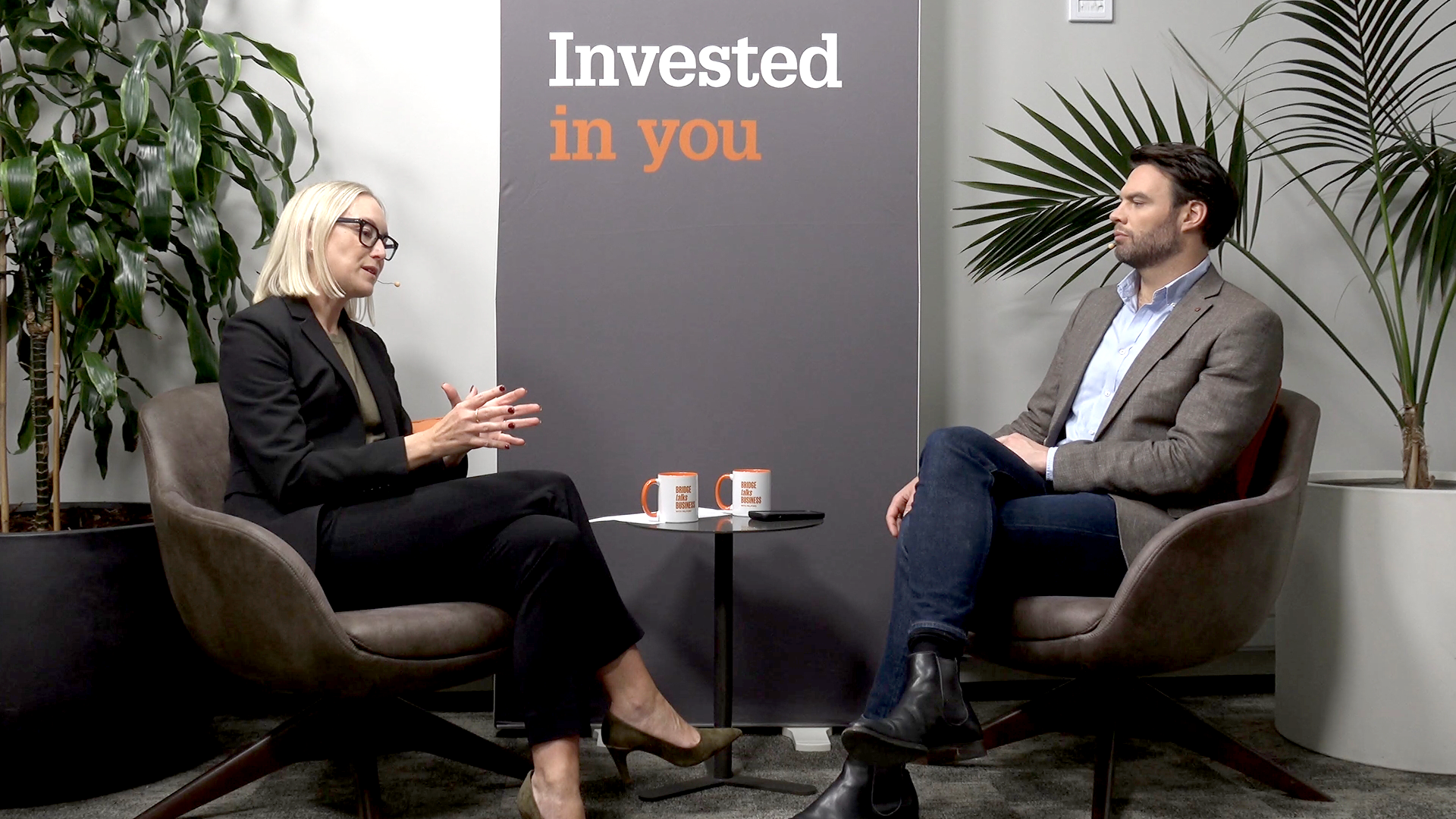
Can you use your KiwiSaver funds for a facelift? In this episode of Bridge Talks Business, Ryan Bridge sits down with financial journalist and money correspondent Susan Edmunds to discuss her new book “Your KiwiSaver Questions Answered”. She shares practical, judgment-free insights and answers to questions you might be afraid to ask – helping everyday New Zealanders feel more confident about their financial future. We have five copies of Susan’s book to give away – check Milford’s Instagram page to be in to win. Terms and conditions apply.
Click here to download the MP3 file or listen to the podcast on your favourite platform:
Bridge talks Business: 23 June 2026
Episode Transcript
Ryan Bridge
Kia ora and welcome to episode 81 of Bridge talks Business with Milford. What an incredibly well-timed week to launch a book talking about KiwiSaver. Right as the politicians line up, basically all agreeing the thing needs to be compulsory, the contributions higher and longer, Susan Edmunds, financial journalist, who we’ve had on the show before, has saved her KiwiSaver book launch for the perfect possible week. And she joins me this week to sit down on the couch to talk about it. First, here’s your top five business bits from the past seven days.
-
- New Fed boss Kevin Warsh conducted his first big meeting, making it clear he would not be the dovish patsy that some had expected. His comments around inflation were no doubt hawkish and the chances of a tightening in monetary policy later this year now look increasingly likely.
- To the UK. Former Greater Manchester mayor, Andy Burnham, gained more traction on his run at the UK PM, winning the Makerfield by-election last week. Looks very much like we will see a change in Prime Minister, there. Could be bye-bye Starmer.
- GDP New Zealand grew faster than expected in Q1. We had some revision on prior readings, implying the economy was operating with a smaller output gap, which may have implications to monetary policy, the OCR. In saying that, data for Q2 has been unequivocally weaker, inflation readings remain relatively subdued.
- Staying with inflation. In the UK, surprised on the downside last week, and wages continued to show disinflationary progress. The Bank of England acknowledging this at their meeting with a relatively dovish hold.
- And finally, this week we get Australian inflation and jobs data, as well as PCE, that’s Consumer Expenditure Inflation out of the US, expected at 3.4% on a core basis, and underlying inflation pressures there persisting.
This week we are sitting down with a friend of the podcast, Susan Edmunds, who’s a money correspondent for Radio New Zealand, financial journalist, you’ve probably seen loads of articles from Susan over the years talking exactly about this topic, about KiwiSaver, about retirement savings, and has a philosophy which I think you’re going to like. Just a reminder, this segment is informational only and should not be considered financial advice. Susan, welcome back.
Susan Edmunds
Thanks for having me again.
Ryan Bridge
And congratulations on the new book.
Susan Edmunds
Thank you.
Ryan Bridge
Very cool. So obviously we have a lot of questions about KiwiSaver here on the podcast and we ask people like you about them all the time. Why did you decide to write the book?
Susan Edmunds
Well, in my day job, I get a lot of questions from members of the public about all sorts of things to do with KiwiSaver. And often they’re the same things that keep coming up, so I thought, why don’t we try and have one resource where people can just dip in and get what they want when they want it. And also I think sometimes people are a bit embarrassed to admit that they don’t know certain things and they feel they should. So this is designed to be a sort of judgment-free zone for everything that you might want to know.
Ryan Bridge
There’s no such thing as a dumb question.
Susan Edmunds
That’s right, that’s right.
Ryan Bridge
Who’s it aimed at? Have you got a particular person in mind?
Susan Edmunds
No, just kind of like an everyday New Zealander whose job isn’t funds management, because I do talk to a lot of people who live and breathe it every day, but just people who are interested but not experts, I would say.
Ryan Bridge
What would you say is the biggest misconception people have about KiwiSaver when they’re talking to you, when they’re asking their questions? What are the myths that this book will help bust?
Susan Edmunds
Well, I think there are a few, but one is that once you’re in, that’s it, you don’t need to think about it again. And obviously being in is an important thing and contributing regularly is important. But then as you go through life, your KiwiSaver should move with you. So if you’re getting closer to buying a first home, you might adjust your settings a bit, and then after a first time you might do it again. And then as you go through maybe taking time out of the workforce or your career changes, all those times should be a little prompt to check in and make sure your settings are still right. So don’t set and forget.
Ryan Bridge
But that is kind of exactly what people do, isn’t it?
Susan Edmunds
It is, yeah.
Ryan Bridge
Is that changing? Are we seeing that number kind of shift around? Are people becoming more aware that they should look at their options?
Susan Edmunds
I think so. I think people are becoming more engaged generally with KiwiSaver. We’ve got all the new operators in the market now who are offering different ways of doing things. And we’ve had a lot of reports of things like Bitcoin and the big AI companies, you know, storing on the share market. And all those sorts of things I think make people think, “Oh, how does my KiwiSaver work with this, and is it working for me?” So I do think we are becoming more engaged and thinking about it a bit more.
Ryan Bridge
If there was one thing from the book that you wished people took away, or you wished that they would change about their KiwiSaver, what would it be?
Susan Edmunds
I think the most important thing is to make sure that you’re in the right fund for your risk profile. So if you’ve got a long time until you want your money, probably take a bit more risk with it. But on the flip side, if you’re about to buy a first home, don’t pile into high growth, because those are the people who email me when the market drops and go, “Ah, what do I do?” And so you don’t want to be in either of those situations where you’re missing out on growth over the long term or you’re in a precarious position just when you need your money. So that’s one thing. And if I can have two, the other one would be if you’re taking time out of the workforce, just have a plan for how you’re going to get back on track, because I do hear from a lot of women, in particular who’ve taken time out for kids, and then they’ve come back and they’ve gone, “Ah, my KiwiSaver balance is so much lower than my partner’s.” And it’s really hard to catch up at that point. So I think it’s a good idea to have a chat before you take that leave about how you’re going to work around that and stay on track.
Ryan Bridge
Yeah, interesting. So people emailing you who are in a hyper aggressive or a high growth fund who are needing to take it out for a house or whatever, that’s quite a vulnerable period, isn’t it?
Susan Edmunds
That’s right.
Ryan Bridge
You need that money.
Susan Edmunds
That’s right. That’s right. You don’t want to see your balance drop by thousands of dollars in a week, which does happen. So you want to make sure if you are going to buy a house in a year or two that you start thinking about maybe pulling back a bit of your risk and being a little bit more conservative.
Ryan Bridge
What are some of the common mistakes that people make with KiwiSaver?
Susan Edmunds
Well, yeah, misaligning your fund with your risk profile is a big one. But, yeah, also I think taking time out of the workforce, not keeping on top of what that means for your retirement savings, although that’s not a mistake, because it is an income-based savings scheme. So if you’re not earning, you do fall behind. But that’s something to just be aware of. I think, hmm, what other things do people do? Panicking when the markets drop, that’s obviously a mistake that can catch people out because – it’s my fault too. We write these headlines saying the market’s having this terrible week or whatever and people go, oh, and they think, oh, we must pull our money out and put it into a conservative investment to protect it. But generally, as long as you know why you’re in a risky fund, it’s the right place to be and you should stick with it.
Ryan Bridge
Do you think people are, I mean, do you think people like learning about KiwiSaver and like learning about financial literacy? Or do you think we do it just because we have to? Do you know what I mean? Because I come across all sorts of different people who know that I do this podcast with Milford. And some are, I think, genuinely interested in financial literacy and retirement and savings. And other people are like, can you just tell me exactly what to do and when to do it because I don’t want to have to think about this sort of thing?
Susan Edmunds
Yeah, that’s right. I think there are definitely two types of people in that regard. And perhaps more people are becoming more confident. And once you’ve realised that it’s not super scary and not something that only other people are good at, it’s a little bit easier to get involved with it and think about it a bit more. But generally, I do hear from a lot of people who think, this is just something that I’m never going to be good at. I’m never going to understand. And I think in that situation, if you don’t understand what’s going on, you should be able to get that information. So there’s lots of tools online that you can use to make sure you’re in the right sort of fund and that sort of thing. But you can also ask your provider for help because if you don’t understand, they should help you and it’s not your failing if you don’t get it. You should just keep asking questions until you do. And I am here to answer questions too, though I don’t give personalised financial advice, but there’s a lot of information out there in the public sphere for people who want it.
Ryan Bridge
What’s the weirdest question you’ve ever had from someone about KiwiSaver?
Susan Edmunds
It’s probably more related to what you can withdraw your money for. One of my friends asked me if she could have it for a facelift. And I said, probably not. Probably not.
Ryan Bridge
Reverse aging.
Susan Edmunds
Yeah, she said it would help her earn more money. And I was like, oh, that’s an argument for your provider, I think. But generally, that would not meet the rules.
Ryan Bridge
Because the rules are quite strict, aren’t they, when it comes to withdrawing. You have to be in quite severe financial hardship to even get a look in, really.
Susan Edmunds
Yeah, that’s true. Or facing a medical procedure that you can’t pay for, that sort of thing. So, yeah, there are quite strict rules. And people do… I think people are caught out sometimes. They don’t realise how hard it will be to make a financial hardship withdrawal. I hear from people who are surprised at how long it takes and how much information they have to give, all that sort of thing.
Ryan Bridge
When it comes to us, as a country, to New Zealand’s long-term financial future, what do you think we should be thinking more about? Or what kind of prize should we have our eye on?
Susan Edmunds
I think the proposal that we’ve heard over the weekend to get kids saving from a young age is really important. Because having that time on your side means you can end up with a much better outcome than you could have if you started later. So I think that’s important, kids starting earlier. And then, yeah, just we should be contributing a bit more than we are to our KiwiSaver funds. Because I think our average balance is about $35,000, which is quite low and not going to really deliver wonderful outcomes at retirement at this stage, although over time it will grow. So yeah, I think we just need to start contributing earlier, make sure we’re contributing enough, and just keep an eye on it and make sure that it continues to evolve with us.
Ryan Bridge
Yeah, because we’ve had it a while now, haven’t we?
Susan Edmunds
Almost 20 years.
Ryan Bridge
Yeah. And as you say, it’s important that we are keeping on top of our individual accounts, but also that as a country we’re keeping on top of the scheme, right?
Susan Edmunds
That’s right.
Ryan Bridge
And making sure that it’s growing with us and helping us to grow, I suppose, as well.
Susan Edmunds
Yeah, that’s right. And it’s there when we need it and providing the assistance that we expect it to.
Ryan Bridge
All your questions answered.
Susan Edmunds
All of them. Most of them.
Ryan Bridge
Good to see you as always.
Susan Edmunds
Thank you.
Ryan Bridge
Thank you so much, Susan.
Susan Edmunds
I appreciate it.
Ryan Bridge
And that was Susan Edmunds, author and money correspondent joining us to talk about KiwiSaver and her new book. All the burning questions that we all have, we all want to ask, but maybe just aren’t brave enough to do so. Check out her book anytime. Also, don’t forget you can like, follow and subscribe this podcast wherever you like to listen. Until next week, don’t forget to invest in yourselves.
Missed previous episode? Don’t worry! Click here to catch up now.