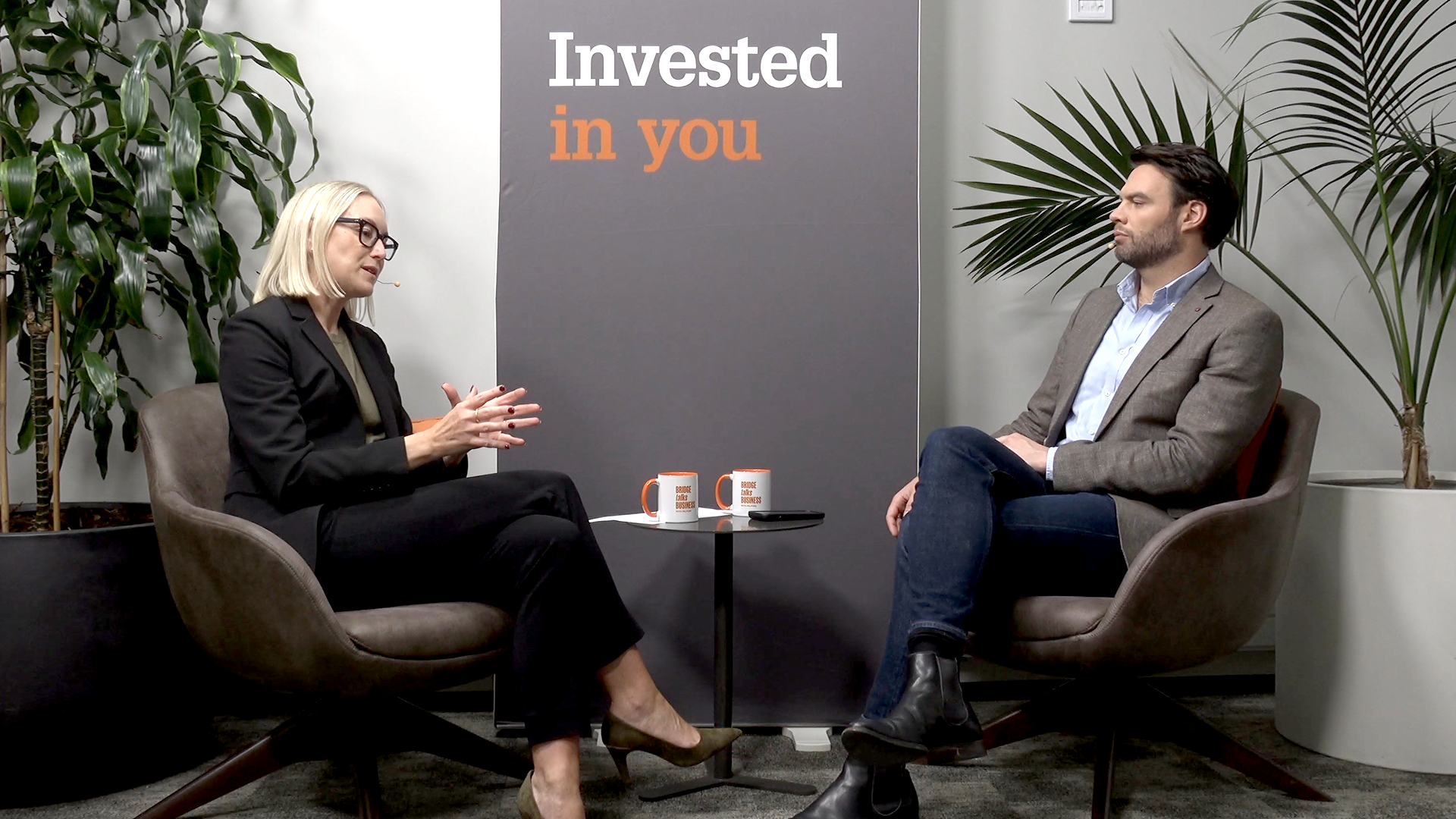
AI is grabbing the headlines, but debt is helping foot the bill. Milford Investment Analyst Katlyn Parker explores with Ryan Bridge the borrowing behind the data centre boom, why even cash-rich tech giants are turning to lenders, and what this growing exposure means for everyday investors.
Listen to the podcast on your favourite platform:
Bridge talks Business: 27 October 2026
Episode Transcript
Ryan Bridge
Welcome to episode 99 of Bridge talks Business with Milford. We talk a lot about equities on this podcast, but bond markets are where a lot of the action is happening. AI companies have quadrupled their borrowing via bonds this year. This week, Milford’s Katlyn Parker talks us through what this means for debt, valuations and the stability of the entire system that we rely on to finance, not just companies, but countries. First your top five.
- New Zealand inflation was softer than expected. The headline number easing back to 3.7%, but several measures of underlying inflation increased and price pressures became more widespread – suggesting inflation going nowhere in a hurry.
- The UK’s headline number was less than ours, but stronger than expected at 3.5%. Core inflation 2.8%. Little evidence that price rises are spreading more broadly across the British economy.
- The UK labour market data showed signs of stabilising, employment indicators improved, the unemployment rate fell. There are some known issues with this data, mind you.
- Global business surveys continue to point to solid economic growth led by the US. US business activity eased slightly but remained strong with new orders accelerating at their fastest pace in four years. Europe was weaker, particularly France, where business activity moved into contraction amid ongoing political uncertainty. Think elections, budgets and riots.
- It is a major week for markets. Central bank decisions from the US and the RBNZ will be in focus alongside the UK budget. Australia gets Q3 inflation data and, of course, we have earnings from major tech companies this week too.
Right, it is time for our sit down interview. This week we’re talking big tech, the AI companies. We hear a lot about what’s going on in the equities markets with AI companies. These guys make huge profits, they’re amongst the most profitable businesses in the world, and yet they are borrowing a lot. They are issuing a lot of debt through bonds. So why is this happening? And should it concern us? This week, Investment Analyst at Milford, Katlyn Parker joins me to discuss. Just a reminder, this segment is informational only and should not be considered financial advice. Katlyn, welcome back to the podcast.
Katlyn Parker
Thank you.
Ryan Bridge
Great to see you. You just can’t get enough, can you?
Katlyn Parker
You can’t keep me away.
Ryan Bridge
Let’s talk about this because we talk a lot about equities on this podcast, but there’s been a bit of an AI debt boom going on with bonds at the moment.
Katlyn Parker
Yeah, look, the share markets definitely get a lot more of the headlines when it comes to AI, but essentially it’s the bond market that’s footing the bill. And the scale has been quite extraordinary. You know, AI is driving one of the largest investment cycles that we’ve seen in decades, and increasingly that investment is becoming funded via debt. AI-related debt has quadrupled in over a year, which is quite extraordinary. And also if we take Amazon, for example, one of the big hyperscalers, last year they issued about $15 billion total debt. This year in the first 10 months of the year, that number is close to $100 billion. So these tech giants were the companies that were sitting with stacks and stacks of cash in the bank. And now they’re becoming some of the biggest borrowers in the world.
Ryan Bridge
Which is interesting because they are so profitable. These big tech companies are amongst the most profitable in the world. Why do they need the debt?
Katlyn Parker
A key distinction as well, is that these companies are starting from an extremely strong starting point, but leverage is increasing and that does shift the proposition for bondholders. Historically, if we look, companies like Microsoft, they would have funded all of their capital investment via their cash flows. However, given the pace of spending, we’re seeing that investment. It’s actually absorbing a bigger chunk of their cash flow. So it’s not a question or concern about profitability. It’s actually we’re seeing more pressure on their cash flow. And that creates a funding gap, which we’re seeing these companies coming to the debt market to fill.
Ryan Bridge
Is this just the beginning of this phase that you talk about?
Katlyn Parker
Yeah, look, exactly. We still see capital expenditure forecasts for the hyperscalers and AI-related companies to increase for next year. I’ve seen anything for the hyperscalers combined up to a trillion. There’s a lot of question marks around how much of that will be funded in the debt market. Overnight, we had Meta come out with an equity raise. So unsure where the balance would be. But if you take, base case, at least a third of that to be funded in the debt market, that is a huge quantum.
Ryan Bridge
Is it just your plain old vanilla bonds or is there something more complicated going on here?
Katlyn Parker
A lot of it is still your pretty standard corporate bonds. But we’re definitely seeing a lot more creative structures come out. And I expect to see more over coming months and years. Things like securitisation, SPVs, private credit. A good example of that is Meta’s Louisiana Data Centre. So that was funded via joint venture with a private credit firm about $27 billion. However, none of that actually sat on Meta’s balance sheet. So another thing as well is leases, right? These companies, they are committing to hundreds and hundreds of billions of leases for the future. But that’s not showing up in their balance sheet. So, you know, in itself, none of this is wrong. But when you’re looking at companies’ balance sheets – at these hyperscalers – you’re not actually getting a clear picture of how much debt that they owe. And as bond investors, you really want to be looking at the full picture.
Ryan Bridge
Because you’re essentially lending them money – you’re the bank – and you want to know what proportion of overall debt that they are holding, and where you fit into the equation, I suppose.
Katlyn Parker
Exactly. You want confidence that you’re going to get your money back.
Ryan Bridge
So where could things start to go wrong here or is there a tipping point?
Katlyn Parker
We’re definitely starting to see some cracks come through and it’s not in your AI tech giants. It’s more so in the smaller, weaker players. And that’s also been coupled with rising interest rates. So smaller companies are doing a lot of borrowing. And then, as you know, US 10-year in recent months hit well over five percent. So that’s adding to the stresses. And an example of one of those companies will be CoreWeave, which rents out AI computing power. A good way to tell what the market’s mood in the bond market is on a particular company is to look at how much does it cost to ensure against this company defaulting and repaying their debt. And the cost to ensure against CoreWeave repaying its debt has about tripled in the past couple of months, which is pretty huge, right? And their bonds are all generally trading sub-80 cents on the dollar. So it’s not your AI tech giants, but it’s these smaller companies that are borrowing a lot of money coupled with rising interest rates and they’re not getting the income streams for a couple of years. They’re investing up front. That’s where we’re really starting to see the cracks come through.
Ryan Bridge
So there’s more risk, which presumably means as an investor, I will get a higher yield, a higher return.
Katlyn Parker
Yeah, for example, CoreWeave, their bonds are yielding about 15%. They’re a high-yield bond, but that’s a pretty extraordinary number. So with AI related financing, investors – even the tech giants – investors are wanting them to pay up. As we discussed, they’re coming with a lot of debt. We don’t know how much they’re going to come with again next year. They’re going to potentially keep printing and printing. So if we’re lending them money, we want to be compensated for the risk that they are going to continue to swarm the market. But it’s not uniform. So, Microsoft, Meta companies like that, yes, they’re having to pay up a bit, but in the grand scheme of things, it’s still pretty cheap funding for them. But your players like CoreWeave, etc., they’re the ones that are really getting punished. So the market is picking winners and losers and that’s always healthy.
Ryan Bridge
What about who’s holding the debt. Who’s assuring or taking the bonds?
Katlyn Parker
It’s mostly your large financial institutions, your bond managers, insurers, pension funds, private credit. But also, everyday investors could also be exposed to it without even realising it. So your hyperscaler debt is about four to five percent of the US investment grade corporate bond index. So if you’re invested in a passive fund that invests in US investment grade debt or an ETF, you will likely have exposure to it. AI related debt is about 10 to 15 percent of that market. So that’s more so on the passive investor side ETFs, whereas active investors like Milford, we can pick and choose, if any, that we want to invest in. And also more importantly, at what price we want to get involved in.
Ryan Bridge
So as you say, Milford, an active investor, you can have more control over which ones you’re picking and which ones you think might be winning.
Katlyn Parker
Exactly. And also taking a view on the future issuance. You know, are we willing to get involved here or do we think things are still going to go wider, because we’re going to see them come and print more and more. So there will be a better entry point for us to be involved.
Ryan Bridge
Well, that’s the thing, because governments are only getting themselves into more debt, you know, and these companies, as you said, are probably going to be issuing more bonds. Does that mean that the yields are likely to keep going up?
Katlyn Parker
Yeah. So that additional spread over, say, your US Treasury, for a company like Meta, they were such a high-quality company that that spread used to be pretty minimal. And now we’re seeing that go wider and wider and wider, in order to become more attractive for bond investors to be involved. But also in the grand scheme of things, these companies, they’re pretty agnostic if they spend an extra point two percent or point three percent, you know, when they look at their overall financial positions.
Ryan Bridge
People often compare what we’re seeing now to the dot com bubble or boom as it was then. Is that fair that comparison?
Katlyn Parker
Yeah, I definitely say it is. I mean, relative to the size of the US economy, the AI build-out is on track to be about twice the size of the telecom build-out. And in the late 90s, these telecom companies, they were borrowing heavily to lay internet cable. As we know, the internet is revolutionary, changed the world. But that demand was actually delayed by a few years and it didn’t come when expected. And a lot of lenders actually lost some money there. So there was a bit of a timing mismatch. And in some instances, you could say there’s a bit of a mismatch here. You know, you have lenders lending for 10, 20, 30 years – basically to a data centre that’s backed by a chip whose value might be outdated. You know, it might be out of date in five years’ time. But there’s definitely a lot of key differences, right? So these hyperscalers, the AI tech giants, yes, their debt is increasing, but it’s still minimal when you look in respect to the amount of earnings that they have. They’re way more profitable companies than the telecom companies were back in the day. And also the market, the share market is actually already starting to punish the companies that aren’t showing that they can make a return. So far, I would say that is a lot more orderly than the dot com. And it’s definitely a lot more disciplined so far.
Ryan Bridge
This is like the trillion dollar question. How do you pick the winners? How do you know which ones are going to be – you know – will the data centres that have been built will be using the chips that will still be in existence and in demand in 10-years time?
Katlyn Parker
I think when it comes for a bond investor, right, you can choose if they’re issuing a multi-tranche if it’s a three, five, seven, ten, thirty. We even saw one of the hyperscalers issue a hundred-year bond at the start of the year. So where you make that up is you go, right, what is the price? Am I being compensated for the risk that the chip is going to be out of date? Do I want to take more short-dated exposure? Do I want to sit at the sidelines? Or what we have seen as well is that longer dated, you know, the 10-year space – the hyperscalers are really having to pay up a lot more there because investors are much more willing to kind of go in that three, five, seven-year max because of those risks. But there’s a lot of unknowns out there.
Ryan Bridge
Fascinating, as always, Katlyn, thank you so much for being on the podcast.
Katlyn Parker
Pleasure. Thank you.
Ryan Bridge
That was Katlyn Parker, Investment Analyst at Milford, talking to us about big tech, AI, and the bond issuances going on at the moment – happening at quite a rapid pace. You can like, follow, and subscribe this podcast wherever you like to listen – we love you doing so. Until next week, don’t forget to invest in yourselves.
Missed previous episode? Don’t worry! Click here to catch up now.