
The fuel crisis is driving up costs across New Zealand’s tourism sector, just as visitor numbers are starting to increase post-Covid. What does this mean for the industry’s outlook, and can tourism keep growing despite the pressure? Milford Private Equity Director John Johnston talks to Ryan Bridge about the outlook.
Click here to download the MP3 file or listen to the podcast on your favourite platform:
Bridge talks Business: 26 May 2026
Episode Transcript
Ryan Bridge
Kia ora and welcome to episode 77 of Bridge talks Business with Milford. Tourism is our second largest export earner behind dairy. Pre-Covid, tourism was number one, but then we had, well, Covid stopped the planes and record commodity prices. But she is making a comeback. Expenditure is the highest it’s ever been, though we’ve had a bit of inflation. One in nine jobs in our economy is tied to tourism. This week, we’ll look at the performance of RealNZ – a privately-listed tourism business here in New Zealand – in light of the big hikes in jet fuel, thanks to the war in Iran. More on that shortly. First, your top five business bits.
-
- Hikes not cuts. The Fed’s interest rate set has alluded to the opposite of what Trump wants them to do, out of the US. This follows much stronger US economic data, which is exacerbating energy price inflation there. Interest rate markets have shifted accordingly, supporting the US dollar.
- UK inflation came in lower than expected, with services inflation notably softer, partly due to administered prices, but also showing signs of genuinely weak demand there. Employment, retail sales data, weak also, spare capacity in Starmer’s, Britain.
- Global PMIs painted a pretty poor picture last week. Europe and the UK posted some of the worst outcomes. Services PMIs falling towards Covid lows there. The US fared better, with the composite PMIs still growing, while the EU and UK fell into contraction.
- Australian employment data came in materially weaker than the RBA was expecting, adding to a recent run of soft data. This confirms, or reaffirms, the RBA minutes, which signalled the bank is likely to hold in the near term after three hikes this year.
- And finally, a double header data week back home, OCR and budget. OCR likely to hold, but we’ll watch the rate path closely. The budget will look much like our weekly supermarket shops at present, no frills.
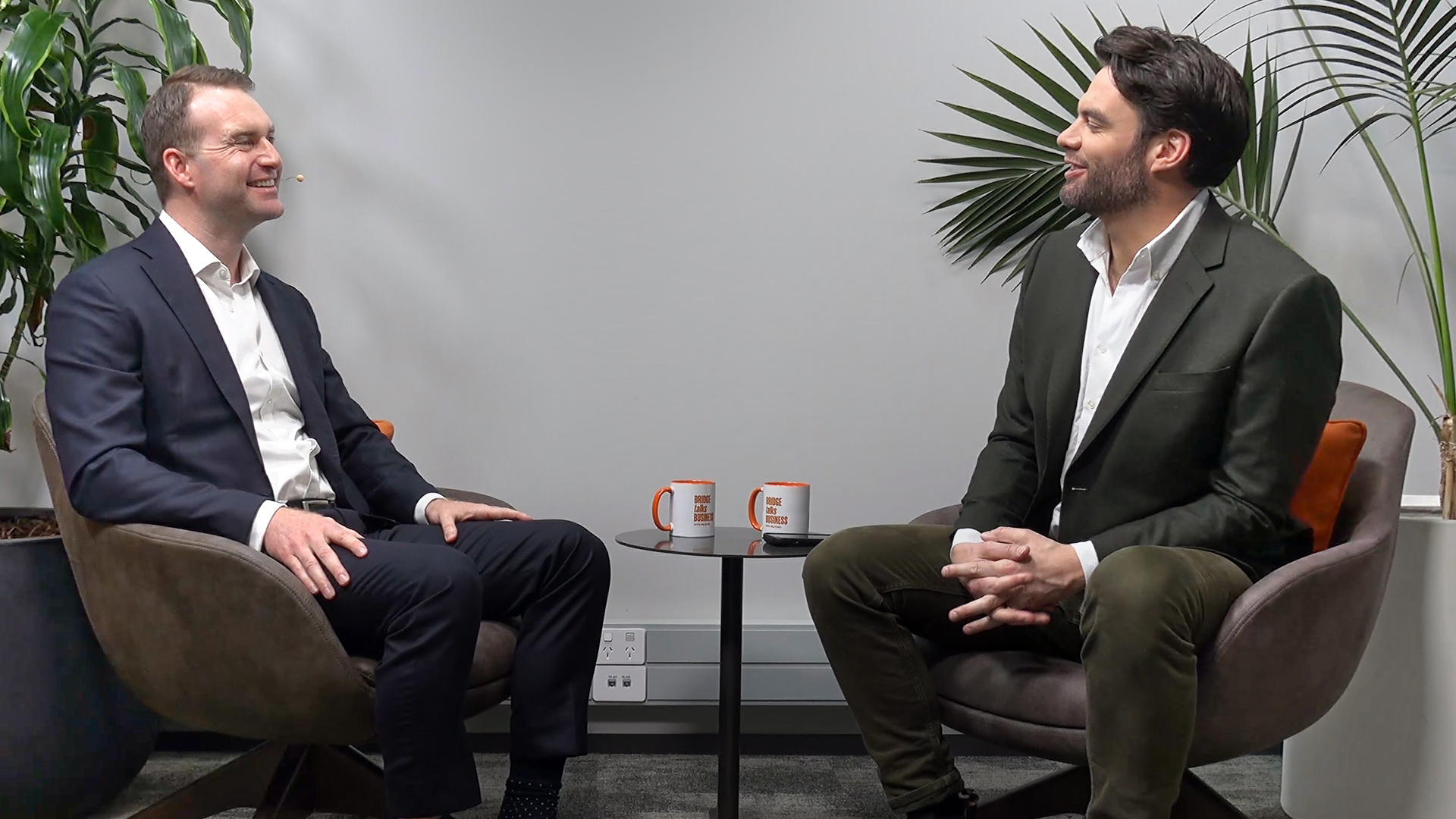
Alright, it is time for our feature interview this week. Milford has invested in stock markets, of course, which are markets that we can all buy into, but also into private businesses – private equity. And one of those businesses is tourism-based. So today I want to chat to John Johnston, who’s the Private Equity Director for Milford, have a chat about tourism, where it is and where it’s going. Just a reminder, this segment is informational only and should not be considered financial advice. John, welcome to the podcast.
John Johnston
Thank you, Ryan.
Ryan Bridge
Lovely to have you here. So we’re talking tourism today. Now, RealNZ is an interesting company. It’s a Kiwi business, and I know that Milford is a shareholder in this business. You’re actually on the Board. I’m keen to get a little sense from you where you think tourism is at right now.
John Johnston
Yeah sure. That’s right, Ryan. We, Milford, our funds own about a quarter of the shares in RealNZ. So I’m on the Board representing those funds. It’s a privately-owned business, so not on the stock exchange. So we have Board representation for that reason. The tourism market is in a really good place, actually, from the knowledge we have of RealNZ. That’s a South Island business, Otago, Southland, Queenstown, Fiordland, mostly. And that part of the country in particular is going very, very strongly from a tourism point of view. But the rest of New Zealand is also now lifting. So tourism, as you’d imagine, has a peak season over our summer. So that’s December to March, basically. And the volumes in our business are about the same as the industry. Generally, nine or 10% up this season just gone on the one prior. And for us, the one before was actually pretty good too. So good, strong lift. And the country as a whole, I think, is back to 96% of pre-Covid levels. But actually, at Queenstown Airport, they surpassed that three years ago. And yeah, it’s crazy down there, but going well.
Ryan Bridge
It’s like its own country down there, isn’t it? With its own economy off the back of tourism.
John Johnston
For good and for ill. I don’t know if you tried to drive down there. Actually, it’s now raising a bunch of infrastructure issues in Queenstown itself, but good for the jobs and good for the wider region.
Ryan Bridge
Yeah, great for the sort of boom. So Queenstown doing really well, South Island doing really well, and the rest picking back up. I noticed the spend in terms of tourism is actually now a record setter. It’s higher than it was pre-Covid, but then we have had a bit of inflation, right?
John Johnston
Yep, yep, that’s true. I think really the difference, the missing link to get us back to pre-Covid volumes or better is China. So China was very slow emerging from Covid. Covid was, I think, effectively a year or even two years longer over there by virtue of lockdowns. And then when the Chinese traveller resumed, they tended to go domestic before longer range to New Zealand. But this February-March, they were back in good volumes down South. And February is their Lunar New Year holiday season. So that’s good. If China lifts again next season as we expect it to, I think the country will comfortably exceed pre-Covid levels.
Ryan Bridge
Back to home and hosed. So what about the Iran situation? Cause we’re a long way from the rest of the world. Is it having a big impact? What’s your hot take here?
John Johnston
Yeah, my hot take will be it’s not having a big impact yet, but it certainly could. So for tourism businesses, there’s two potential impacts. One is actually the direct effect of increased diesel pricing because different tourism businesses have different diesel usage, but some of it’s quite high. So if you’ve got buses, boats, that’s a lot of diesel consumption. And the cost of diesel in our business, we’re not 50% in much. It’s since softened, about half of that lift has been given back. So that’s good in the short run, but who knows with Trump and so on, where the price goes. But I suspect tourism businesses can handle that. Diesel in an operating cost base of a tourism company is not as bad as say a freight company or a rural contractor. But if the cost of living pressures more broadly impact demand for tourists to come, that’ll be a much bigger issue. The good news is we aren’t seeing that yet. So a lot of bookings are made well in advance to come to New Zealand, particularly the group tour stuff. And the bookings for next summer are good and holding. And we haven’t really seen any attrition yet due to this. So that’s reason for hope, but it’ll all depend on how long this goes on for.
Ryan Bridge
Yeah absolutely. Because I guess that’s the worry, isn’t it? That the forward bookings might start to fall off a little bit if people go, “Oh, well, the price of jet fuel, therefore, my airfare is going from this to this. So I might not go as far or I might go closer to home”.
John Johnston
Yeah, airfares is one thing, but also if their family budgets are just getting more and more stretched by everything going up, ultimately that will be a problem. But as I say, we haven’t seen bookings falling off as yet. This business at RealNZ also has a ski field business down South. We’re a bit worried about the New Zealand consumer being soft this coming winter, which is only a couple of months away. But actually bookings out of Australia have been excellent. So overall, reasonably positive for now. And certainly if the thing gets resolved, I think tourism should be okay.
Ryan Bridge
Yeah. Now let’s look a little further ahead than this even. So we’re sort of talking the next couple of months to the next year. What about the next few years? There is always an argument in New Zealand about how much tourism is too much tourism. Can you have enough tourism? What types of tourists, that sort of thing. What are you seeing? What are you expecting over the next few years?
John Johnston
Yeah, good question. People have different points of view on this. I mean, certainly before Covid, I think in places we were bumping up against, if not capacity, maybe social licence – freedom camping and other really crowded pinch points. So we could see those emerge again. Milford Sound is one which is getting back towards its pre-Covid volumes. And in there, in the middle of the day, it was getting incredibly busy in 2019, 2020. And we’re expecting that again. So this needs to be managed carefully. There’s gonna be infrastructure needed, but I actually think the demand is gonna be strong. What Milford does over the next five or 10 years. New Zealand has what the world wants, really, in terms of tourism. And if you go, as I’m sure you do to Europe or elsewhere, if you go to Venice, we’re nothing like that. I’m not saying we want to be overrun like they are, but arguably we should be preparing to take more people, but do it in a really premeditated way such that the freedom camping’s happening in the right places and the Queenstown traffic has got a solution.
Ryan Bridge
Yeah, and we’ve got some kind of mechanism, which I mean, personal view, I think the government will do something about that lever to actually recoup some costs from the tourism sector to pay for some of the infrastructure in places like Queenstown – bed tax or something like that.
John Johnston
I personally hope so. I mean, I don’t think as a country we have the luxury of just sort of stopping tourism growth. We need the income, right? Agriculture, tourism. But this premium rather than bulk story has to be the story of the next five or 10 years. So the more we can reorientate towards activities which take a higher average price point, rather than more bums on seats would be a good thing.
Ryan Bridge
100%. So Milford’s obviously not just invested in RealNZ. That’s one part of an investment, but of the wider portfolio, lots of different sectors. Are you as upbeat about the general picture for New Zealand as you are about tourism?
John Johnston
No, would be the truthful answer. But I’m not terribly downbeat either. I’m potentially more upbeat than I was even a few months ago. The budget on Thursday will actually be very important, I think. They’re always important, but this one I suspect in particular. So agriculture has been booming. So we’ve been very upbeat on that sector. Everyone probably knows the dairy story, but meat prices – very high. It’s great. I believe we’ve had really good weather for most agricultural areas recently. So that’s a good story, but I would say in terms of other sectors, in anything with discretionary spending like domestic tourism, retail, it’s still really challenging. And this cost of living increase isn’t helping. The other one is construction. It’s a big part of the economy and we do all need that to get moving. My understanding is there were some genuine green shoots actually happening in the construction sector, say November to March. But again, this inflationary environment we’re now in is potentially putting projects on pause or at least reassessment. So not making a political pitch, but it’ll be great if infrastructure-wise the government could get some projects moving. And to be fair, they’ve approved a bunch through the fast track. I think we need that to hit the road.
Ryan Bridge
Good pipeline. Good runway approach.
John Johnston
Essential.
Ryan Bridge
Very good. Well, that is an excellent kind of précis of where we’re at, but particularly in the tourism space. John, lovely to have you on the podcast. Thank you very much.
John Johnston
Thanks Ryan – good to see you.
Ryan Bridge
That was John Johnston, Private Equity Director at Milford talking to us about tourism and RealNZ. Just a reminder, you can like, follow, subscribe this podcast wherever you like to listen. We love you doing so. And don’t forget until next week to invest in yourselves.
Missed previous episode? Don’t worry! Click here to catch up now.