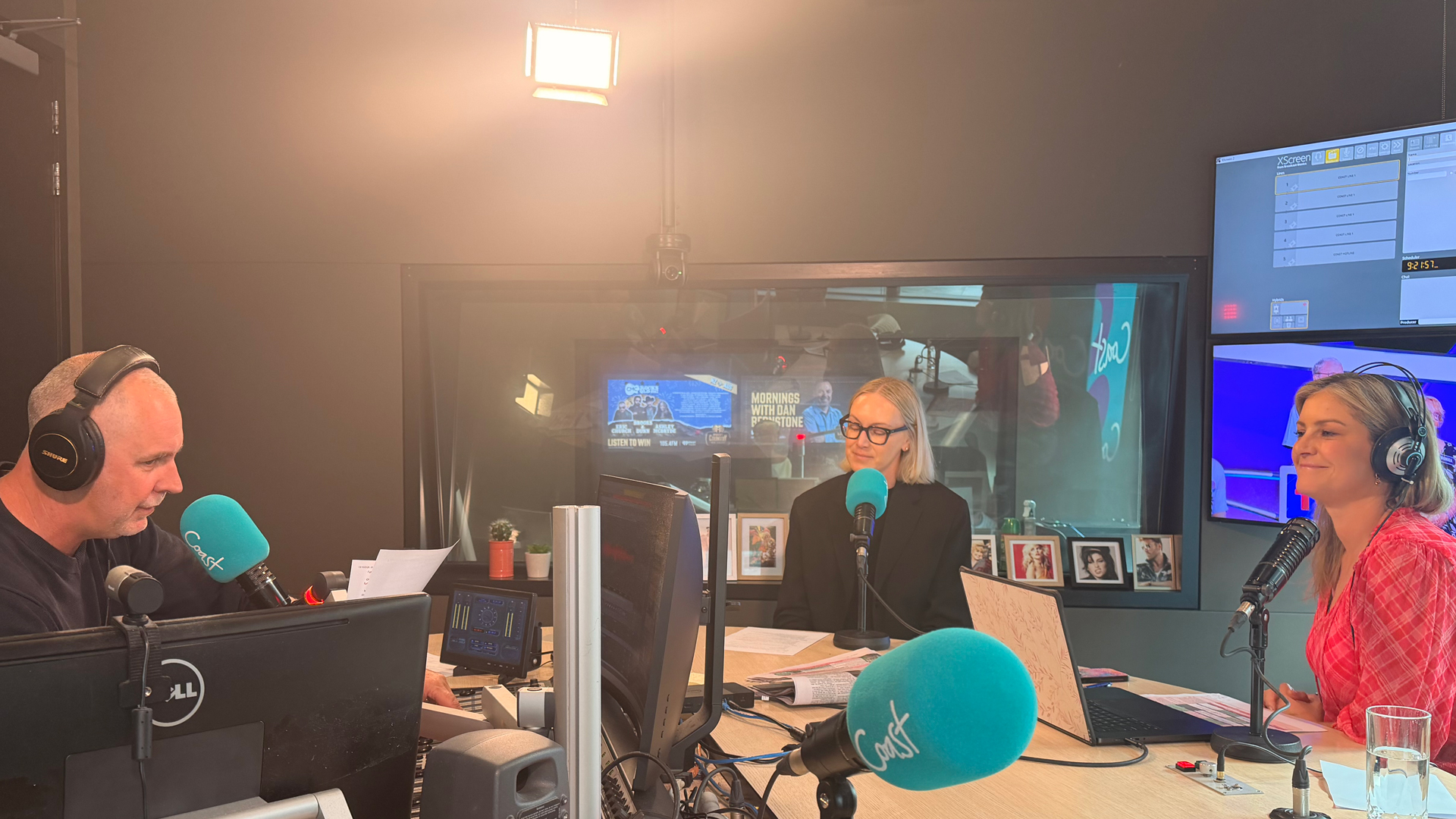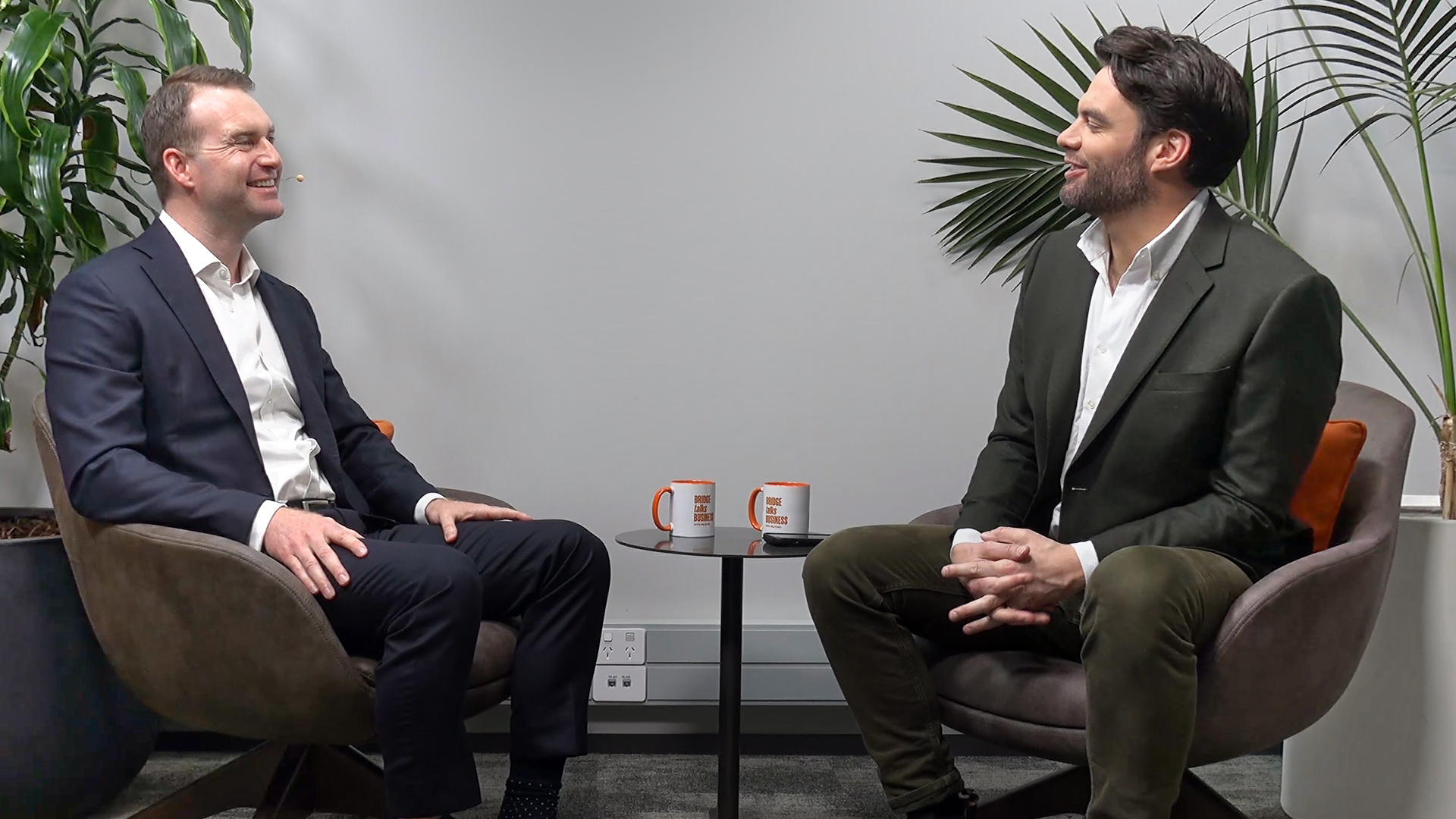
Accelerating AI investment and resilient tech demand were standout themes from the latest earnings season. Frances Sweetman, Milford’s Head of Global Equity Research, talks with Ryan Bridge about the biggest take-outs, including early signals on consumer spending and inflation, how geopolitical risks are filtering through to sentiment and costs, and what’s driving the latest bouts of volatility.
Click here to download the MP3 file or listen to the podcast on your favourite platform:
Bridge talks Business: 5 May 2026
Episode Transcript
Ryan Bridge
Kia ora and welcome to Episode 74 of Bridge talks Business with Milford. Great to have your company. The most valuable companies in the world have been reporting their earnings for Quarter One out of the states. AI is the meat in the sandwich again. We’ve seen Wall Street stocks reach new highs in the past week, again. Is the value of big tech based on expectations of AI profits or real revenue? Milford’s Frances Sweetman, as always, has the answers for us this morning. First, here’s your top five business bits.
- The US Fed kept interest rates on hold last week as expected, but Powell’s final meeting as Chair left his successor, Warsh, with a divided committee. They’re turning more hawkish, getting them – the committee that is – to agree on the rate cuts that Trump is demanding, will be a tall order.
- Strong earnings from big tech last week – more proof of investor conviction and the strength of AI. Frances has details in a second.
- The Middle East conflict remains intractable with the Strait of Hormuz closed to traffic from both sides. The oil price continues to move higher to new conflict highs. Other asset prices appear unperturbed for now.
- New Zealand confidence data continues to plummet. ANZ business and consumer confidence showing big declines in their latest readings. The economic recovery in New Zealand is fragile and makes it unlikely the RBNZ is going to compound the problem by hiking rates significantly due to an oil shock.
- This week we look to US labour market data. US economic data generally has been strong recently and this might start to show in a rebound in the labour market despite the geopolitical tensions in the war.
Alright, it is time for our feature interview this week and it’s a goodie. We’re speaking to Frances Sweetman, Milford’s Head of Global Equity Research about Quarter One Reporting Season for the big companies in the US. Just a reminder, this segment is informational only and should not be considered financial advice. Frances, welcome back. Lovely to have you again.
Frances Sweetman
Thank you for having me.
Ryan Bridge
Right. I want to get to Reporting Season, Quarter One results are out. A big couple of weeks. What is your big takeaway? What’s the big theme that you’ve noticed?
Frances Sweetman
The huge theme, which has really dominated markets throughout April, has been tech. And we’ve seen the MSCI World Index of technology companies up 17.5% in April, and the semiconductor index up 30%. So, it’s been a huge month. But the hyperscaler results, so that is Meta, Amazon, Google, Microsoft to a certain extent, they came out on Thursday last week and they really provided some weight behind that kind of share price response. They were just fantastic results across the board.
Ryan Bridge Right. And I want to pick your brain on exactly those points in a second. But what about other themes that have emerged? I’ve seen a lot of commentary around consumer spending, for example.
Frances Sweetman
Yes, you are right. And because this Iran conflict and the higher gas prices that people are finding when they hit the pump has really been dominating market concerns that, you know, we’re going to see higher costs for companies and then also a pullback in spending that can hit across the economy. We haven’t seen that yet. So, actually, we saw share markets quite strong across particularly the consumer sector and the industrial sector with share prices really bouncing back from where they sold off when the conflict first broke out. And that’s because we really have seen strength, broad-based strength, particularly in the US across the economy. And we’ve seen that some of those tax cuts and tax breaks that the Trump administration made last year really come through in this first quarter. So households have been benefiting from tax refunds that got paid in cash in March and April. And that has been offsetting some – the strength of the US economy.
Ryan Bridge
They are so resilient, aren’t they? Those consumers, they’re like hardy consumers in the US. What about the war? I mean, we talk about the war a lot on the podcast. Have we actually seen any material impacts in these results from these companies from the war thus far?
Frances Sweetman
So we really haven’t. And I think one of the big dynamics is that consumer wallets benefiting from those tax refunds and actually that dynamic switches when it comes to May, because those tax refunds will have been given and gas prices continue to go up. So that’s really interesting. But we haven’t really seen it in costs come through materially yet. Some increases in freight costs that companies are feeling, but they’re managing to offset that through their own cost management predominantly. So, no, we’ve seen very, very little impact for companies yet. But we are seeing companies being a little bit more cautious in those outlook statements, outside of tech.
Ryan Bridge
Yeah, this is the other thing I wanted to get to, because – I love having you on because you’ve read everything and you know everything. The outlooks. You know, the IMF will give us an outlook for what the global economy is going to look like. What are these individual companies telling us about their outlooks?
Frances Sweetman
So there’s probably three ways to think about it. One is tech, where you’re seeing these incredibly strong outlook statements on demand for AI that is just getting bigger and bigger and bigger – almost insatiable. And so you’re seeing pipelines grow, the pace of revenue growth accelerate and even profit margins improve. So that piece of the market is really strong and that halo effect is sweeping down into industrials that are supplying data centre build outs, and even electricity companies. So that part of the market is really strong. Then there’s the rest of the US, where we’ve seen that really strong results in the first quarter, but companies haven’t upgraded what they expect for the full year, given the strong start. They’re saying, at the moment, our expectations are broadly unchanged. We’ve had a better start, but we see some more risks ahead. So we’re just going to play what we see in front of us. We’re well hedged. We’re managing our cost outlook. Other areas of inflation are coming down. We think things are OK.
And then there’s the UK and Europe, where things are a little bit tougher again. The impact of those higher energy oil and gas prices have a much greater hit to inflation, or increase to inflation and hit to household wallets, in those countries. And there we’re seeing companies that have reported – there aren’t as many as in the US. This is really a US result season. But we’re seeing them being more cautious. So an example is the UK supermarkets who, before the outbreak of the conflict, were expecting to grow sales about 5% – are now saying that range could be anywhere between 5% and -5%, because there’s just a really wide range of outcomes here on how this conflict evolves.
Ryan Bridge
And the UK specifically is, I think, going to be the worst hit by the conflict as well. So there’s obviously some worry there.
Frances Sweetman
Yeah. And, you know, you’ve obviously got household energy prices and petrol prices being more like 12% of the average household expenditure versus in the US where it’s sub five. So the difference is really stark. And you’ve got the Bank of England that’s more likely to raise rates than cuts. So it’s tough there.
Ryan Bridge
How have the share prices, the valuations, reflected the results this time around?
Frances Sweetman
Well, in the US in particular, the market has been just incredibly strong. And that’s reflecting that bullish first quarter. But I think it’s also investors betting on a continued de-escalation of the conflict. And so that can turn on a dime. We’ve seen the industrial and the consumer sectors very, very strong, as I said, bounce back, but we’ve seen those more defensive sectors, for example, health care underperform. And it’s interesting because the dynamics in the US market are that at the moment, even though we’re seeing less volatility at headline share market level, which is continuing to perform really well in the face of a lot of risks, we’re seeing a lot more volatility between the surface, both in between different sectors and in between different company share prices. And so we see money rotate depending on what the balance of those risks looks like. So, at the moment, investors have been quite bullish and we’ve seen strong performance from those more cyclical sectors and underperformance of defensive sectors like health care. And that could switch as those expectations of the conflict change.
Ryan Bridge
Right. So, basically the big things are who should most be worried about in terms of the war and then AI and big tech. In terms of the AI situation, I think we’re heading for the sixth consecutive quarter of double digit growth for the S&P 500. In terms of the AI, I don’t want to call it a bubble, but the hype around it. How much of that is expectation of profits versus actual revenue that’s coming in from AI?
Frances Sweetman
It’s such a great question. And this goes to the crux of what investors are trying to balance as they’re investing in these companies. So when you look at that double digit earnings growth for the S&P 500, about 25%, sorry, earnings growth for the tech sector is about 25%, anywhere up to 50% for stocks like Nvidia. And then the rest of the S&P 500 is growing probably more like high single digit. Although it’s quite difficult to really break that out when you take into account that halo effect that the AI CapEx is having in other sectors that are benefiting from that build out as well. And some investment banks think it could be as low as flat earnings across the rest of the market.
Personally, I think it’s probably sort of mid to high single digit earnings growth across the rest of the market at the moment, but with those risks ahead that we talked about. The problem that we have is that the investment that’s been made by these AI companies is so huge, expected to be $US750 billion this year. I mean, that’s nearly three times New Zealand’s entire GDP. And at the moment, the revenues aren’t high enough to demonstrate that they’re going to deliver a really good return on that investment. But what we have seen this year is those revenues really accelerate. I mean, Anthropic has been able to quadruple its revenues since it launched its latest model earlier this year. And CapEx isn’t quadrupling. So it’s moving in the right direction. And we’ve seen this result season that margins from the likes of Google and Amazon have slightly improved. And that’s really important because it signals that even though these investments are not delivering the return that they need to yet, hopefully they will. If we’re getting way higher revenue growth and margin improvement coming after the investment as it gets monetised.
Ryan Bridge
And where are they? I always wonder and maybe these results have given you an idea or you’ve been able to glean something. Is the revenue for AI coming from advertising around an AI product or from a user pays model, you know, a subscription-type service or both?
Frances Sweetman
Predominantly, it’s a subscription-type service and then some extra usage paid for tokens or the amount of AI compute that you’re consuming. But what is happening is that those big hyperscalers are paying for that with the revenue that they’re getting from advertising. So it’s all sort of broadly working for the likes of Amazon, Meta, Google. Whereas Anthropic and ChatGPT, you have a – sorry, open AI that runs ChatGPT – you’re having to rely more on private debt and private investment in order to be able to fund their CapEx. So that is another area of risk. But as long as everything is moving in the right direction, the market is happy to take that risk. But it does mean that as the expectations around what those future returns will look like continue to evolve, we will see volatility in the sector.
Ryan Bridge
So is it fair to say – it’s great to have the time to do a bit of a deep dive with you on this by the way – is it fair to say that there’s a sort of an optimus outlook here that AI will do all the great things that we think it will do or that we hope it will do, and that the conflict in Iran will go that way rather than that way in terms of escalation?
Frances Sweetman
Yeah, I think that’s a fair way to characterise markets at the moment. It’s definitely a delicate balance.
Ryan Bridge
Frances, thank you for coming on the podcast. Great to see you as always.
Frances Sweetman
Thanks, Ryan.
Ryan Bridge
And that was Frances Sweetman, head of global equity research at Milford, talking to us about Quarter One Reporting Season out of the US. Just a reminder, you can like, follow and subscribe this podcast wherever you like to listen. Until next week, don’t forget to invest in yourselves.
Missed previous episode? Don’t worry! Click here to catch up now.